BIT 019
You cannot organize with people you cannot reach
September 16, 2026
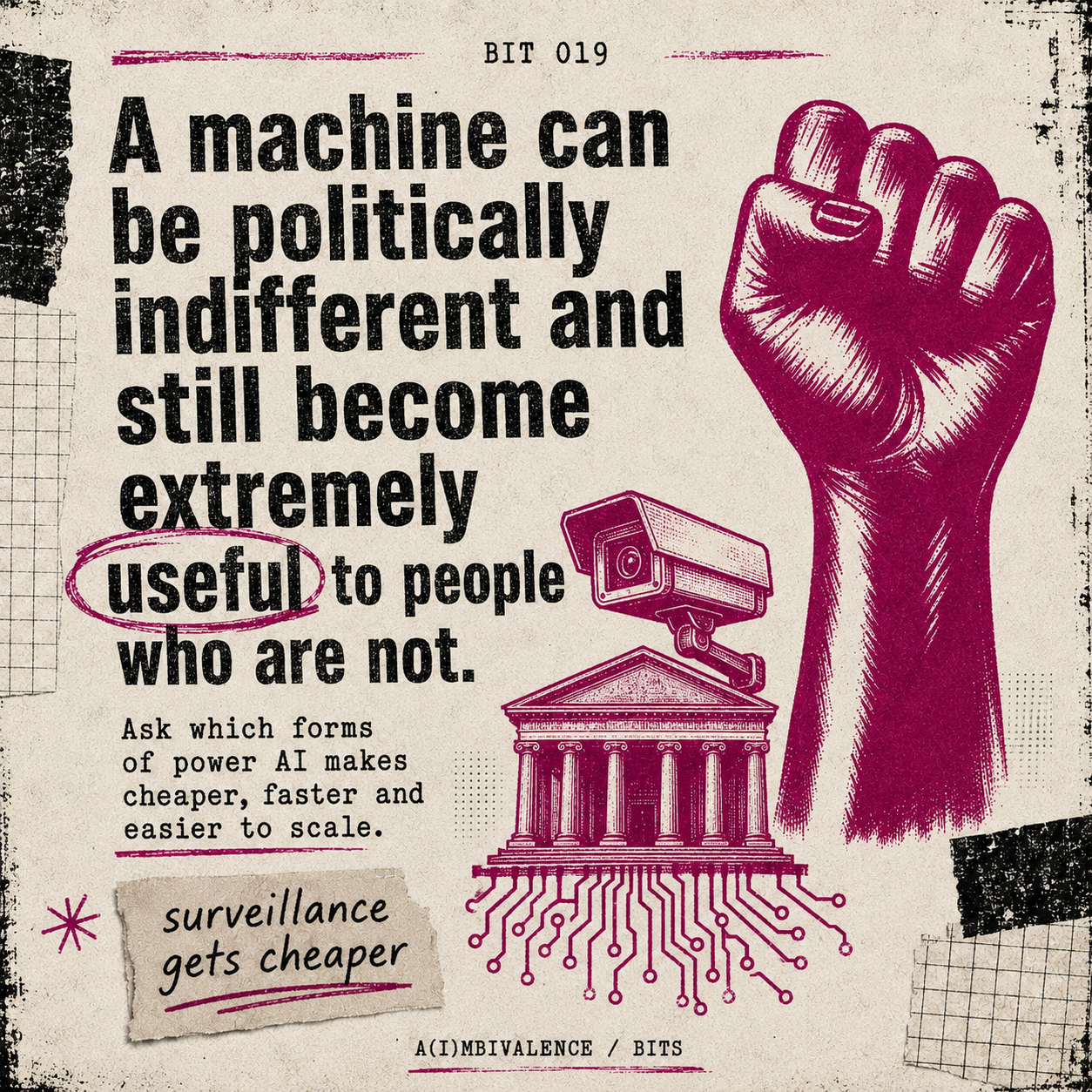
The political consequence of all this may be larger than the fate of awkward text messages. Collective power depends on people being able to reach one another. Organizing requires conversations that cannot be fully personalized, optimized or made comfortable. People misunderstand each other, disagree, discover different interests, change their minds, build trust and occasionally realize that the story they had about somebody else was wrong. Politics happens in that contact.
Now imagine more and more of this contact being mediated through personalized systems that explain what others “really mean”, summarize arguments, suggest responses and adapt information to our existing preferences. Each person becomes surrounded by an interpretive layer designed to make the world easier to process. That may feel helpful individually while making something much harder collectively: encountering another person on terms that neither of us fully controls.
A society of perfectly personalized individuals is a terrible starting point for collective power. Organizing requires people to become legible to one another, not merely to the systems serving them. It requires the possibility of irritation, surprise, persuasion and solidarity with people who do not already fit our model of the world. You cannot organize with people you cannot reach. And if AI increasingly becomes the layer through which we meet one another, the political question is not only what these systems tell us. It is what forms of collective life become harder when we no longer have to encounter each other directly.