BIT 046
Third Places Are Political Infrastructure
October 23, 2026
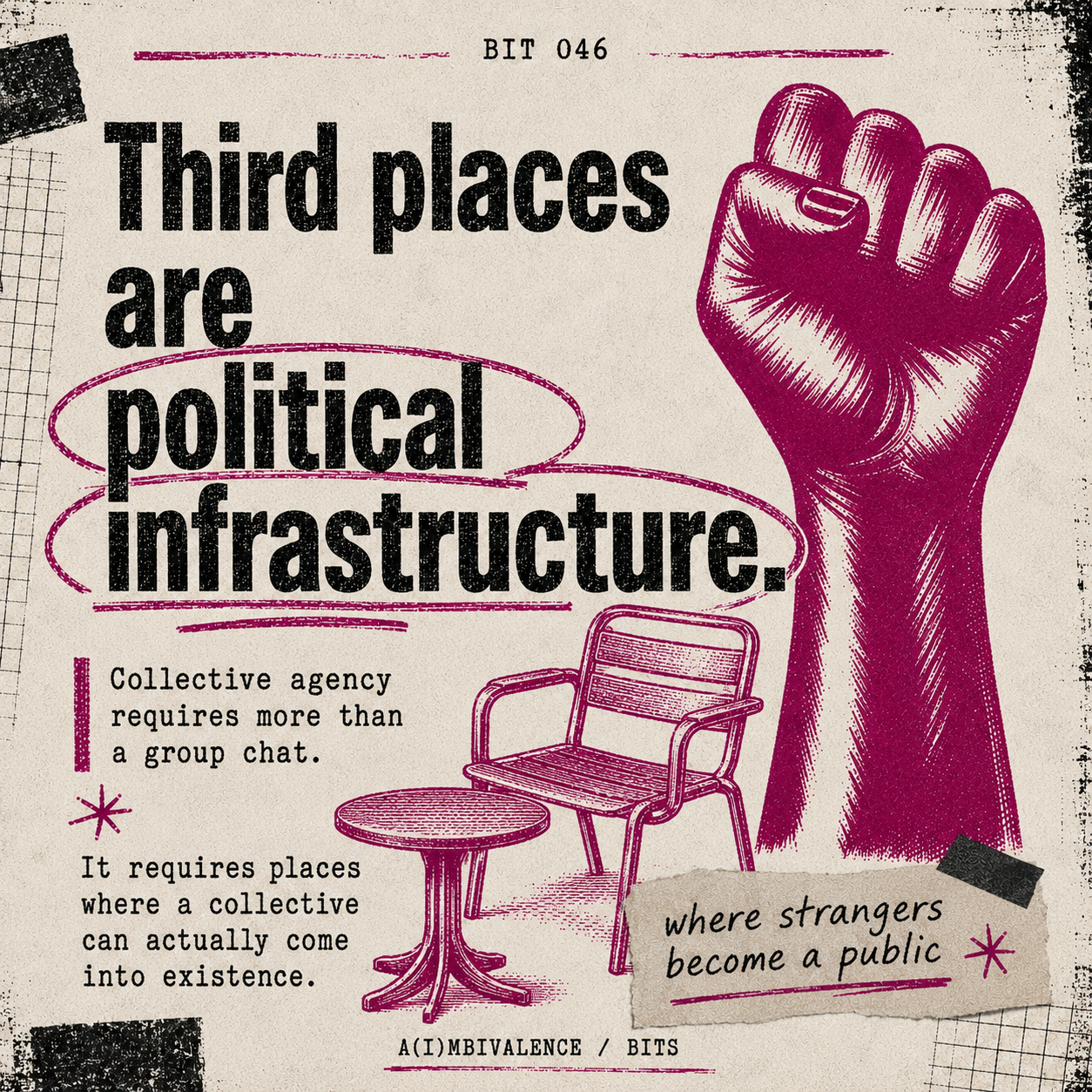
Libraries, parks, pubs, cafés, community centers, clubs, cultural spaces, public squares: we tend to discuss third places as pleasant urban accessories, somewhere between nice-to-have and lifestyle amenity. I think this radically understates what they do. Third places are some of the increasingly rare environments in which people can encounter one another without first being sorted into colleagues, customers, followers, matches, target audiences or demographic segments.
That makes them political infrastructure. People sit around, overhear things, complain, exchange information, argue, discover common problems, meet somebody they would never deliberately have searched for and occasionally realize that the private misery they have been quietly managing is not private at all. This is how isolated experience can become shared knowledge, and shared knowledge can become organization. Collective agency requires more than a group chat. It requires places where a collective can actually come into existence.
This matters even more as digital life becomes exquisitely personalized and almost entirely enclosed by private platforms. The personalized feed promises a world arranged around you. The third place does something far more politically interesting: it makes you share space with people who were not selected for you. A society that loses those spaces does not merely become lonelier or less charming. It loses part of the physical infrastructure through which strangers become neighbors, grievances become conversations, and individuals occasionally become a public.