BIT 010
The unreachable person
September 3, 2026
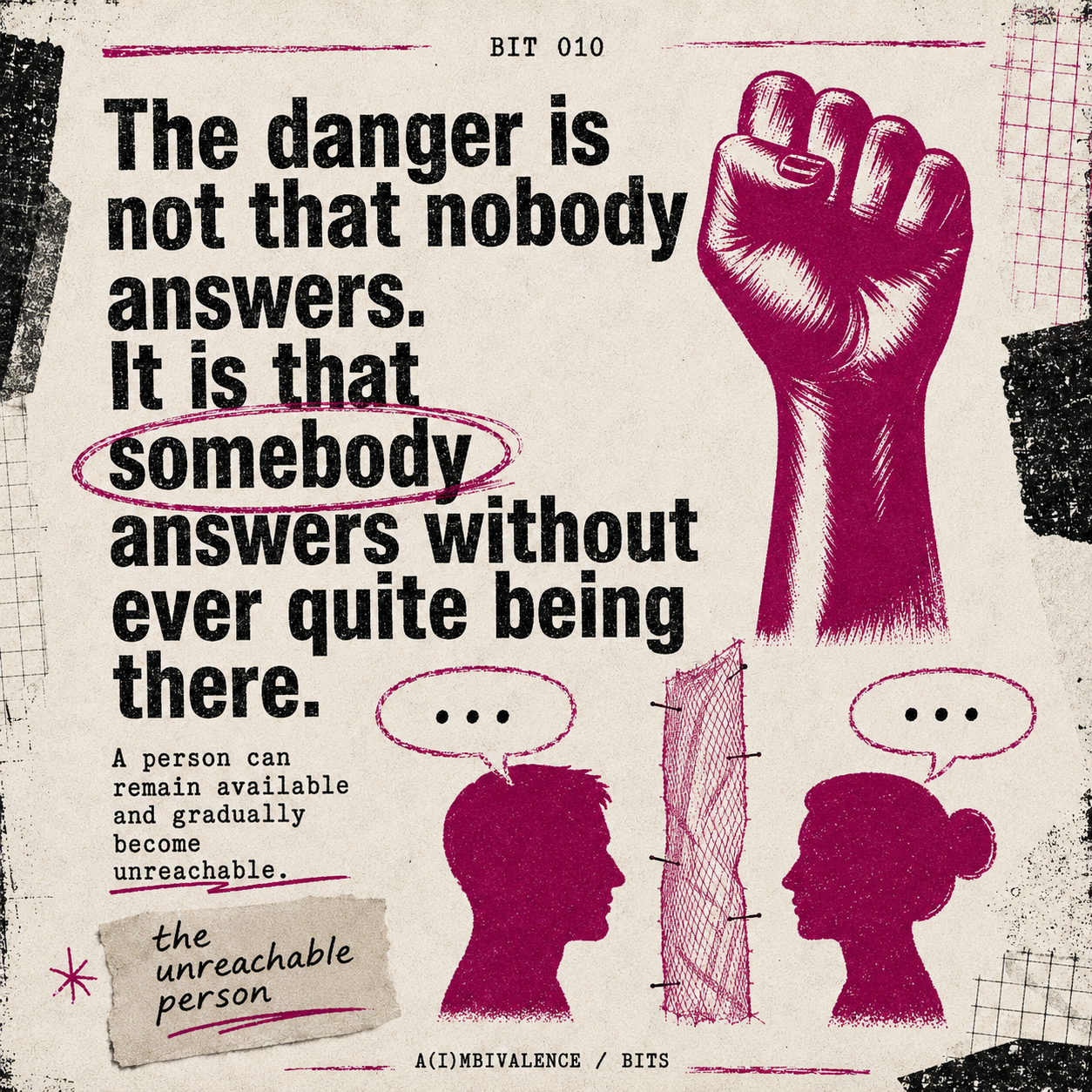
There is a particular kind of AI use that worries me more than having a model write an email or summarize a document. It starts when the model becomes the layer through which we receive other people. Someone sends us a message and, before we decide what we think about it, we ask AI what it means. Before we notice how it makes us feel, we ask whether the sender sounds angry, manipulative, unreasonable, passive-aggressive, interested, distant, or whatever else we are afraid of getting wrong. Then we ask the same system to formulate the reply. The other person never quite reaches us directly, and we never quite reach them directly either.
Technically, two people are still communicating. Messages go back and forth. Replies may even become clearer, calmer and more considerate. But something has changed. The awkward pause in which I work out what I think has been replaced by interpretation. The messy process of finding words has been replaced by generation. The possibility that I might reveal myself accidentally, misunderstand you, have to ask a second question, or formulate something imperfectly has been reduced. And this is precisely why the process is so attractive. Human contact is risky. Mediation makes it safer.
The danger is not that nobody answers us anymore. It is that somebody answers without ever quite being there. AI can become a membrane between people, thin enough that communication still looks intact while thick enough to prevent actual contact. A person can remain permanently available and gradually become unreachable.