BIT 045
The Right to Waste Time
October 22, 2026
Capitalism has developed an almost supernatural ability to annex every minute it supposedly gives back to us. Finish the task faster and you receive another task. Automate the boring part and congratulations, you can now concentrate on “higher-value work”. Listen to the podcast at 1.7x while exercising. Learn Spanish on the commute. Monetize the hobby. Build the personal brand. Turn the holiday into content and the book into five lessons for your professional network. Even rest has been conscripted: sleep properly, meditate and recover so that tomorrow you can return as a more efficient unit of production.
Against that backdrop, wasting time starts to acquire a wonderfully subversive quality. Read a novel and extract absolutely nothing from it. Walk without counting the steps. Learn something useless. Make art nobody will see. Sit in a park. Spend four hours with friends and produce no photographs, contacts, insights, outcomes or personal growth whatsoever. And resist the temptation to justify any of this by saying it will make you healthier, more creative or more productive later. That is productivity ideology sneaking back through the kitchen window.
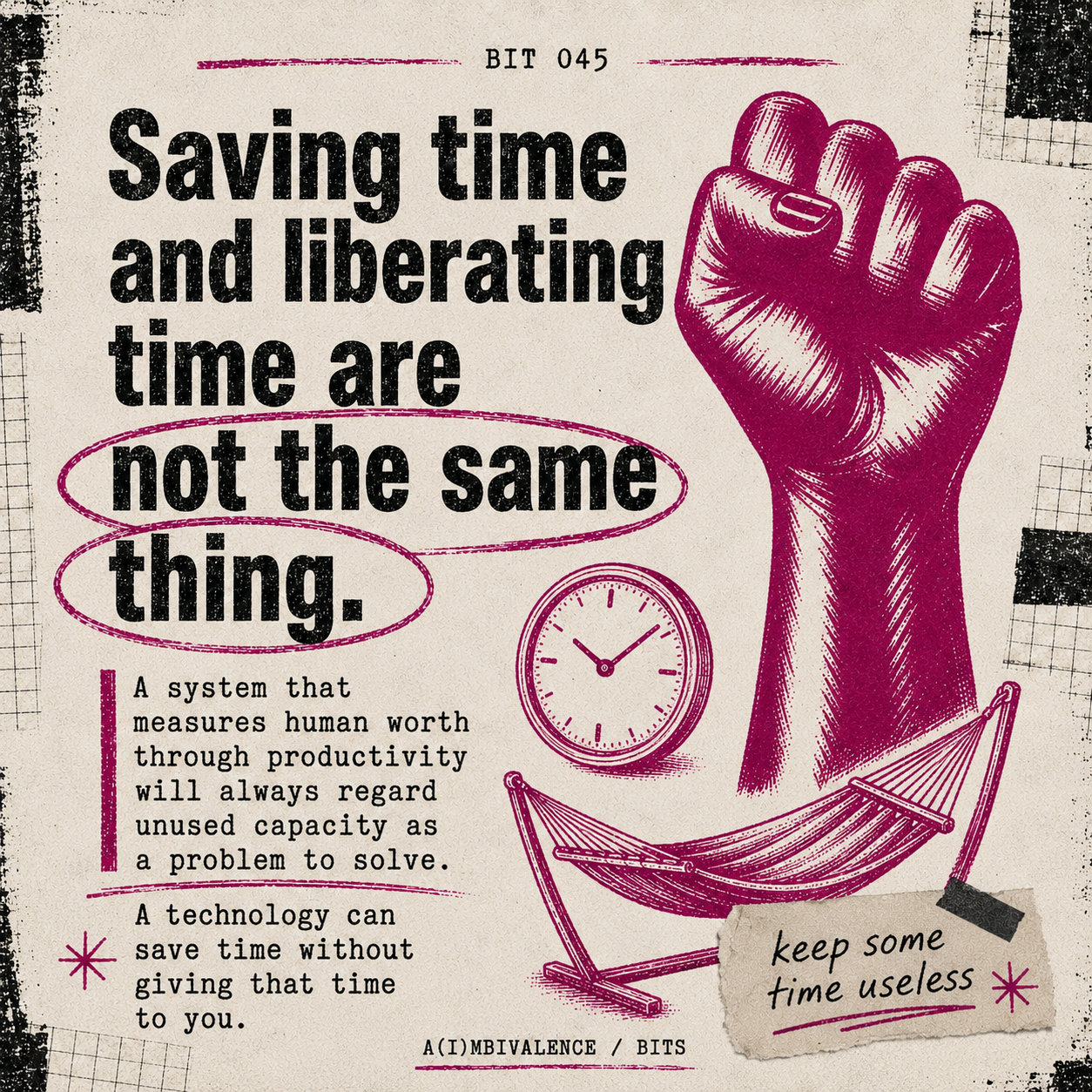
AI may genuinely save enormous amounts of human time. But saving time and liberating time are not the same thing. If every minute released by automation is immediately annexed by another task, another optimization or our own internalized demand to be useful, nothing has actually been liberated. A system that measures human worth through productivity will always regard unused capacity as a problem to solve. Perhaps one of the more radical freedoms we could demand from automation is embarrassingly simple: some of the time it saves should be allowed to remain completely, gloriously useless.