BIT 054
The Right to Decide, Not Just the Right to Object
November 4, 2026
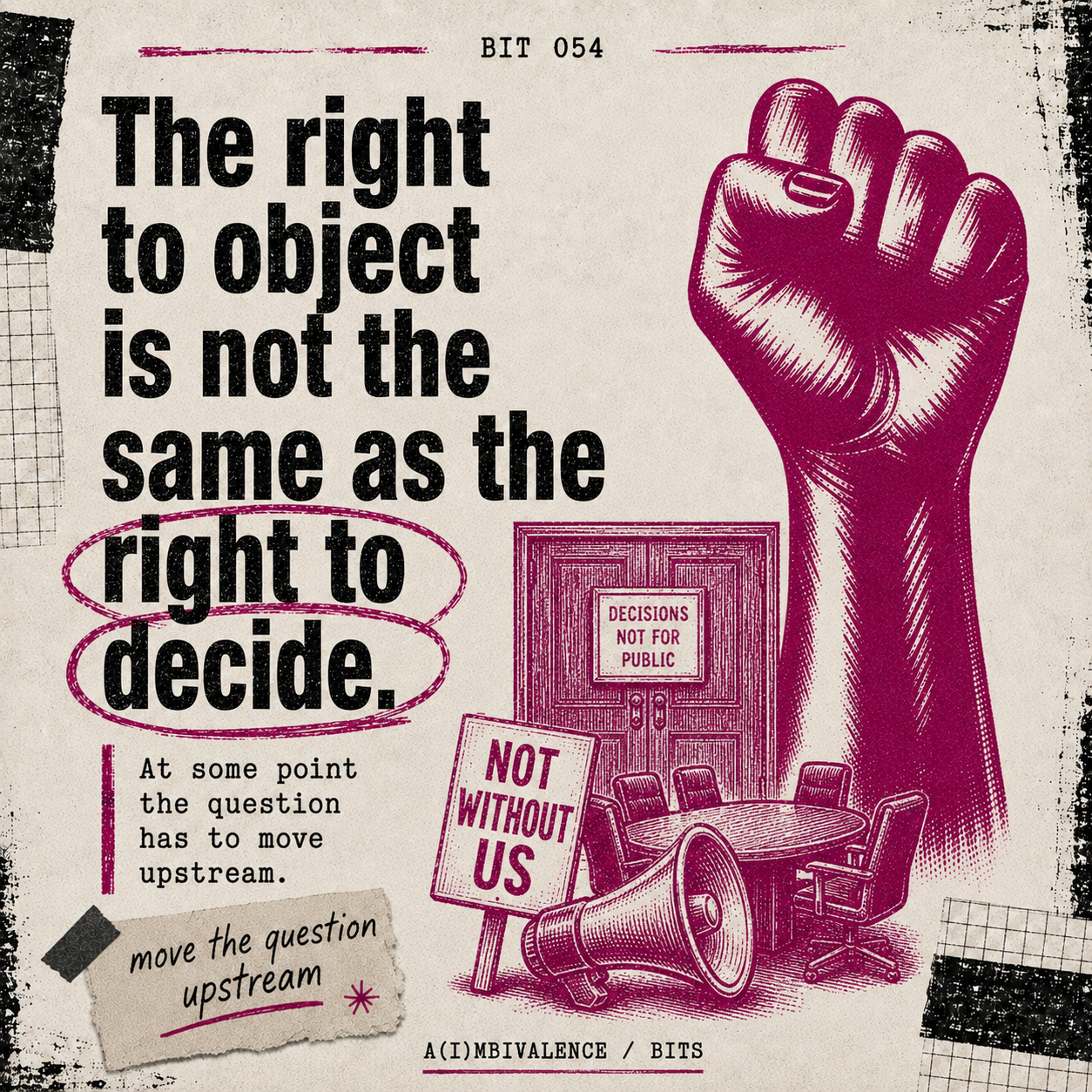
Liberal societies are often quite generous with the right to object. Protest. File a complaint. Submit feedback. Comment on a proposal. Join the consultation. These rights matter enormously. But there is something politically strange about a society in which millions of people are permanently invited to react to decisions made elsewhere and only rarely invited to make those decisions themselves.
AI makes this particularly obvious. Workers can object to surveillance after procurement. Artists can object after their work has already been scraped. Communities can object after infrastructure has been planned. Citizens can protest after dependency has been built. Resistance still matters, but eventually the question has to move upstream. Not only: how can people oppose power? Also: why did they have so little power over the decision in the first place?