BIT 012
The reasonable person machine
September 7, 2026
One of the most common uses of generative AI is also one of the least spectacular: “Make this sound more professional.” “Make it less emotional.” “Make me sound reasonable.” “Soften the tone.” There are many situations where this is genuinely useful. Institutions reward a very particular kind of communication, and people learn quickly that being understood is not enough. You also have to sound calm, competent, pleasant and sufficiently detached from whatever is happening to you.
AI makes that self-editing almost effortless. Every angry email can be cooled down, every awkward sentence polished, every vulnerable message made more composed. In some cases this protects people. In others it becomes automated self-policing. The messy, emotional, culturally specific, classed, gendered and very human way someone actually speaks gets passed through a machine that knows roughly what “reasonable” is supposed to sound like. And, unsurprisingly, “reasonable” often resembles the language institutions already prefer.
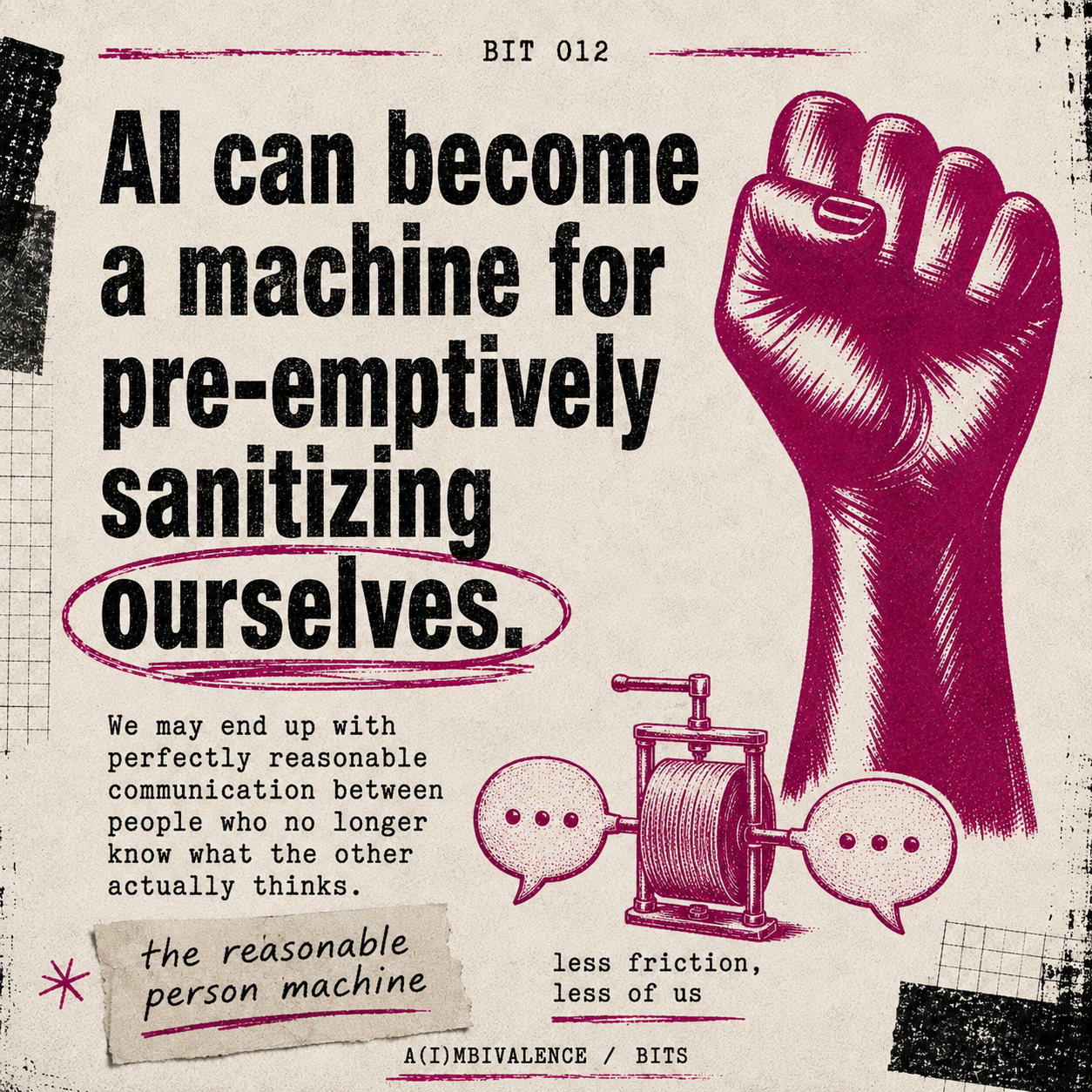
We may therefore end up with a strange improvement in communication: everyone sounds clearer, calmer and more professional while becoming less recognizable. AI does not only help us express ourselves. It can also become a machine for sanitizing ourselves before anybody else is allowed to see us. The result may be perfectly reasonable communication between people who increasingly have no idea what the other person actually sounds like.