BIT 055
The Algorithm Does Not Need to Know What You Are Worth
November 5, 2026
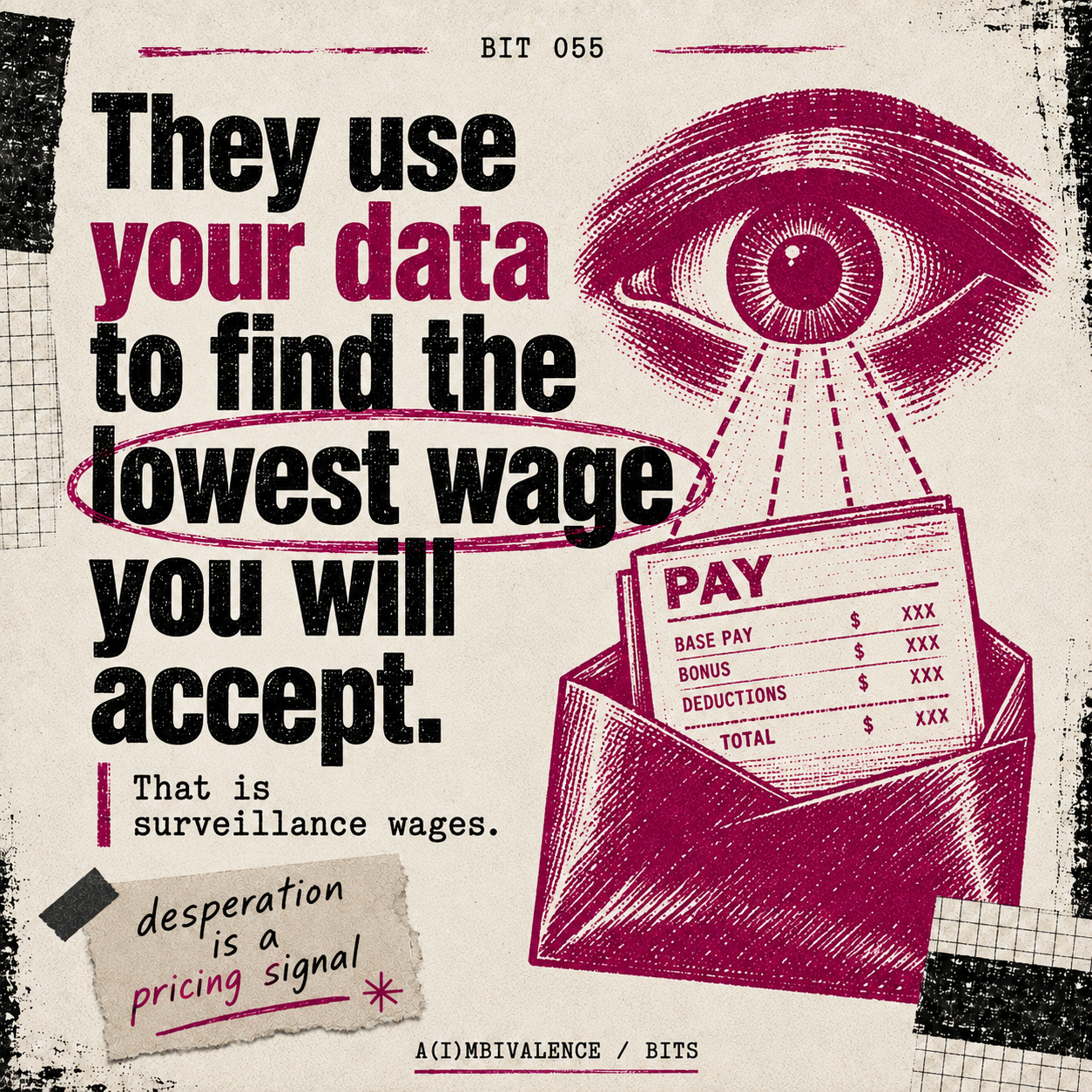
We like to pretend that wages have something to do with what work is worth: skill, experience, scarcity, responsibility, contribution. Surveillance wages introduce a rather different question. Not: what should this job pay? But: what is the lowest amount this particular person is likely to accept? Previous offers, acceptance patterns, availability, location, work history and other personal signals can all become useful when the objective is no longer to establish a wage, but to find somebody’s floor.
That changes the bargaining relationship. Two people can do substantially the same work and receive different offers because the system has learned that one of them is more likely to say yes to less. The algorithm does not need to understand the value of the work. It only needs to understand the worker well enough to buy their labor cheaply. We have spent years calling this kind of individualized optimization “personalization”. Applied to wages, the word suddenly sounds considerably less friendly.