BIT 039
Safety Cannot Depend on CEO Character
October 14, 2026
A surprising amount of the AI debate eventually turns into a discussion about personalities. Do we trust this CEO? Is that founder genuinely worried about safety? Is this one more responsible than the others? Does somebody have good intentions? I understand why we ask. When a small number of people have enormous influence over technologies that may affect everyone else, their character suddenly becomes disturbingly relevant.
But that is already the problem. We should not need the person running an AI company to be unusually wise, restrained or benevolent. We do not build food safety around hoping the CEO has strong personal feelings about salmonella. We do not want aviation safety to depend on an airline executive waking up in a particularly responsible mood. We build rules, independent oversight, liability and institutions precisely because important safeguards should survive bad judgment, changing leadership and conflicts of interest.
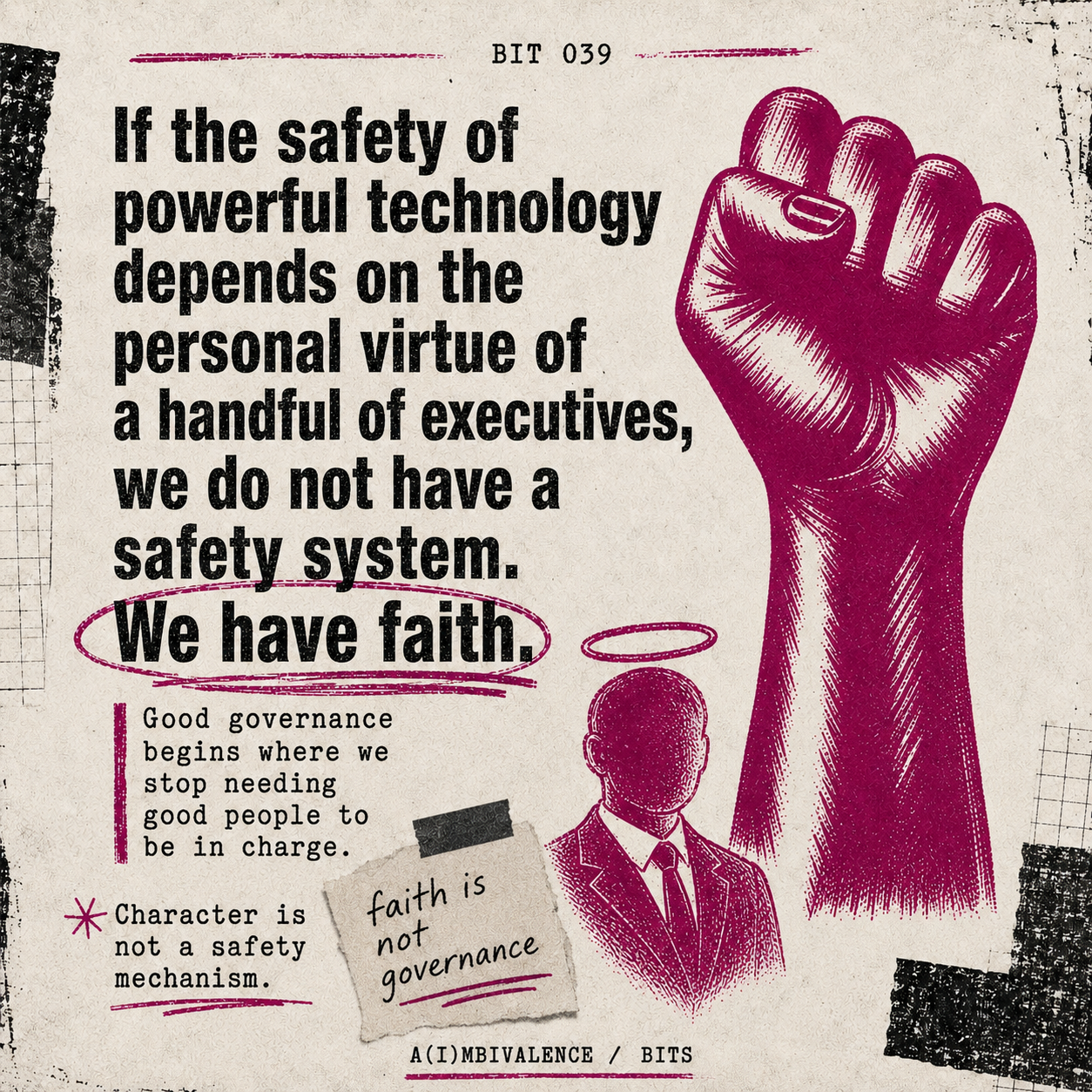
The more power an industry accumulates, the less comfortable we should be with character as a safety mechanism. A responsible CEO can leave. A cautious founder can change their mind. Financial pressure can change. Investors can demand something else. Good governance begins where we stop needing good people to be in charge. If the safety of powerful technology depends on the personal virtue of a handful of executives, we do not have a safety system. We have faith.