BIT 036
Privatized Upside, Socialized Downside
October 9, 2026
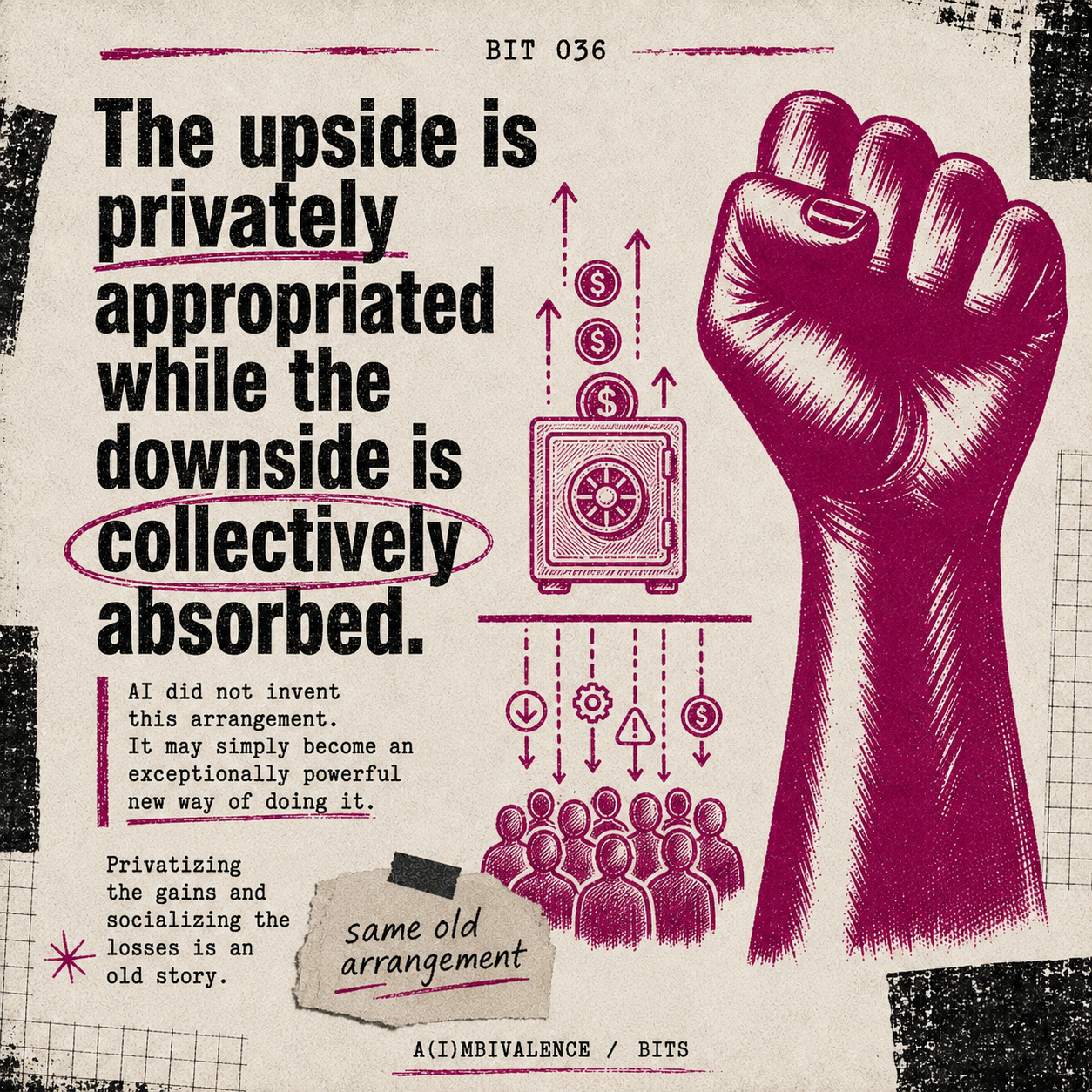
There is a familiar economic arrangement hiding inside the AI debate. When things go well, the value created by a technology can be captured privately through equity, market power, intellectual property, subscriptions and returns to investors. When things go badly, many of the costs have a peculiar tendency to escape the company.
Workers absorb displacement and restructuring. Communities absorb infrastructure demands. Public institutions deal with new forms of fraud, misinformation, security problems and social disruption. Governments fund education and retraining, regulate the damage and occasionally subsidize the infrastructure that created the private wealth in the first place. None of this requires catastrophe. It is the much more ordinary pattern of companies being able to monetize benefits that are easy to own while externalizing costs that are difficult to keep on a balance sheet.
This is why discussions about AI risk cannot be separated from discussions about ownership and distribution. A system in which the upside is privately appropriated while the downside is collectively absorbed creates an obvious incentive to take more risk than society itself might choose. We already have a name for the general arrangement: privatizing the gains and socializing the losses. AI did not invent it. It may simply become an exceptionally powerful new way of doing it.