BIT 005
Post-work is not post-power
August 20, 2026
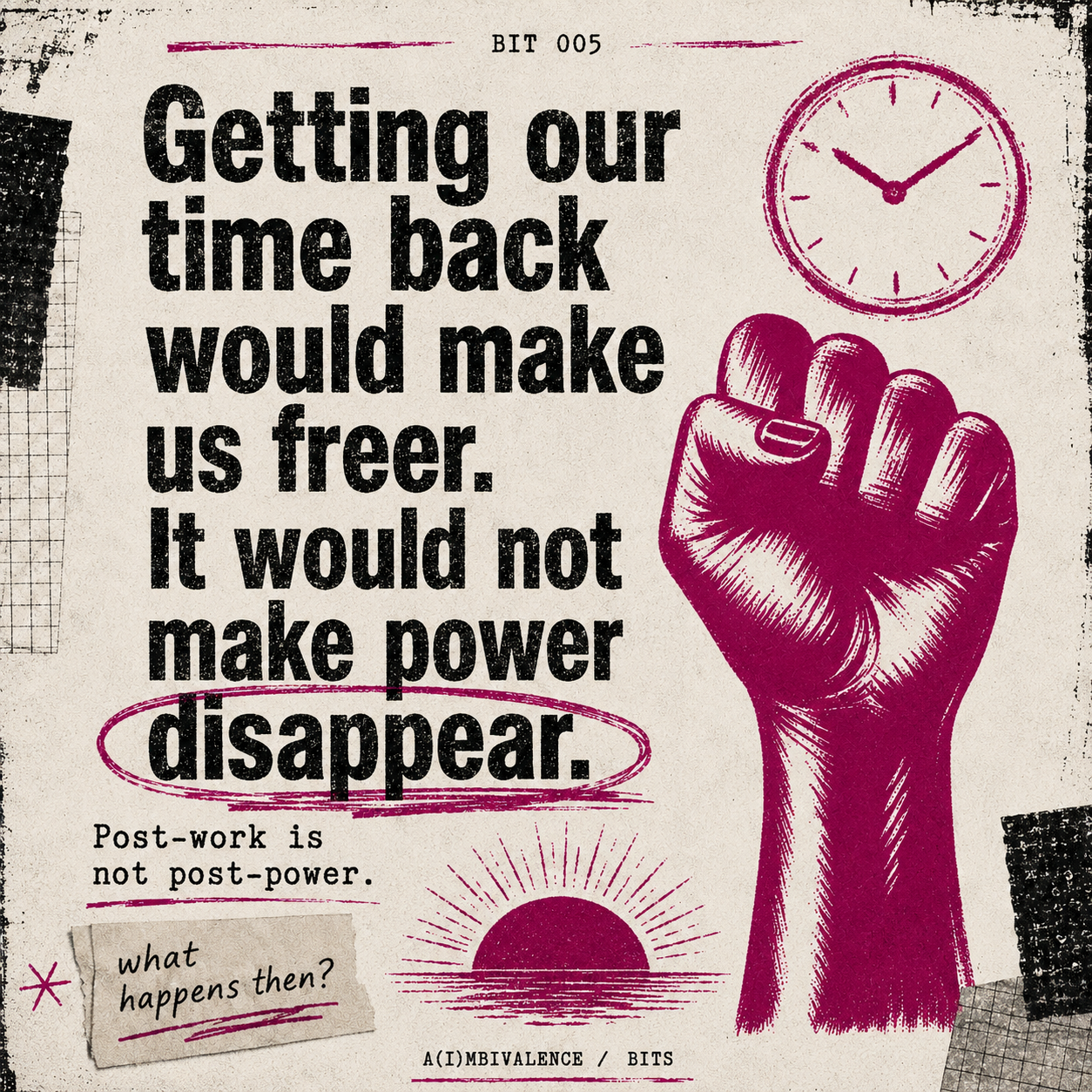
Suppose we win. AI and automation dramatically reduce the amount of labor society needs, productivity gains are actually shared, and the working week shrinks to twenty hours without people losing half their income. Great. Now what?
It is tempting to imagine that getting our time back would automatically make us free, and it would certainly make us freer. Wage labor occupies an enormous part of our lives, not only in hours spent working but in commuting, recovering, preparing, worrying, scheduling our lives around work, and organizing almost everything else around the fact that tomorrow morning we have to do it again. But work is not the only way power enters our lives. Capitalism does not merely organize what we produce, it has become extraordinarily sophisticated at organizing what we desire: what we buy, what we consider beautiful, what success looks like, which experiences are worth having, what kind of body we should want, and what kind of home, career, holiday, and person we should become. Even our leisure has industries dedicated to capturing, measuring, monetizing and optimizing it.
You could socialize every robot, automate half of today’s work, introduce the twenty-hour week, and still wake up on Saturday morning with the vague feeling that you should be doing something more productive. That is the uncomfortable part. Getting our time back would be an enormous political victory. But having time and knowing what we actually want to do with our lives are different forms of freedom. Post-work is not post-power. It simply gives us enough time to start noticing some of the other forms.