BIT 020
Intelligence as a Utility
September 17, 2026
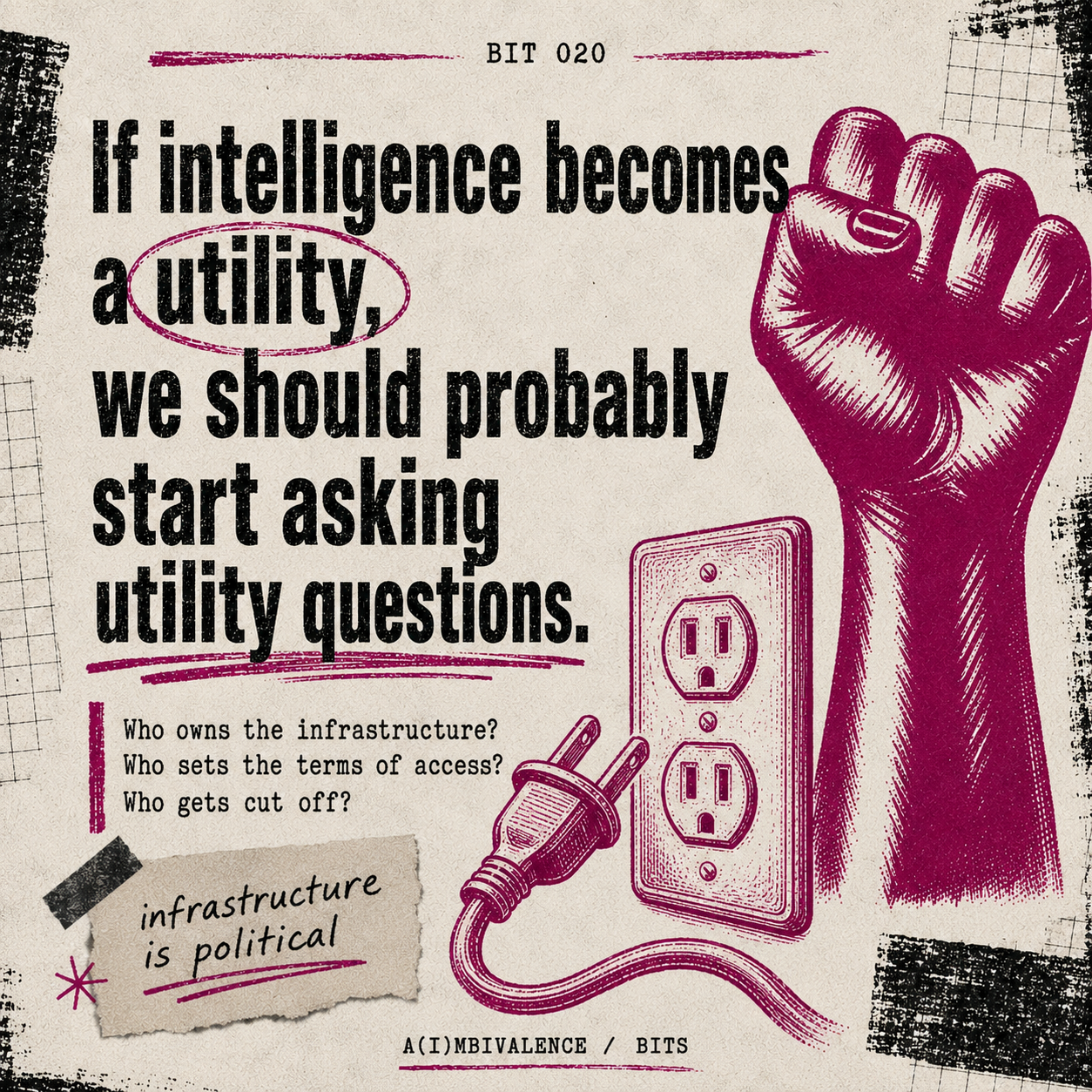
Imagine intelligence becoming a utility, something available on demand in much the same way we think about electricity, connectivity, or cloud computing. At first, that sounds rather wonderful. Need help understanding a contract, learning something new, solving a technical problem, navigating bureaucracy, translating a document, or making sense of an unfamiliar situation? Intelligence on tap. Cheap, abundant, available to everyone.
But the moment we call something a utility, we should probably start asking utility questions. Who owns the infrastructure? Who sets the conditions of access? Who determines the price? Is everyone entitled to a basic level of service? Can access be withdrawn? Can the provider see what you are using it for? What happens when the service fails, changes its terms, becomes unaffordable, or simply decides that your particular use is no longer permitted? And what happens when schools, workplaces, governments and other institutions reorganize themselves around the assumption that everybody has access to it?
At that point, AI is no longer merely a tool we may or may not choose to use. It becomes infrastructure we are expected to depend on. And infrastructure is political precisely because individual choice eventually stops being enough. If intelligence really is going to become something like a utility, then perhaps the most important question is not how intelligent it becomes. It is whether something increasingly necessary for participating in society should be governed primarily as somebody else’s product.