BIT 030
Dependency Is Power
October 1, 2026
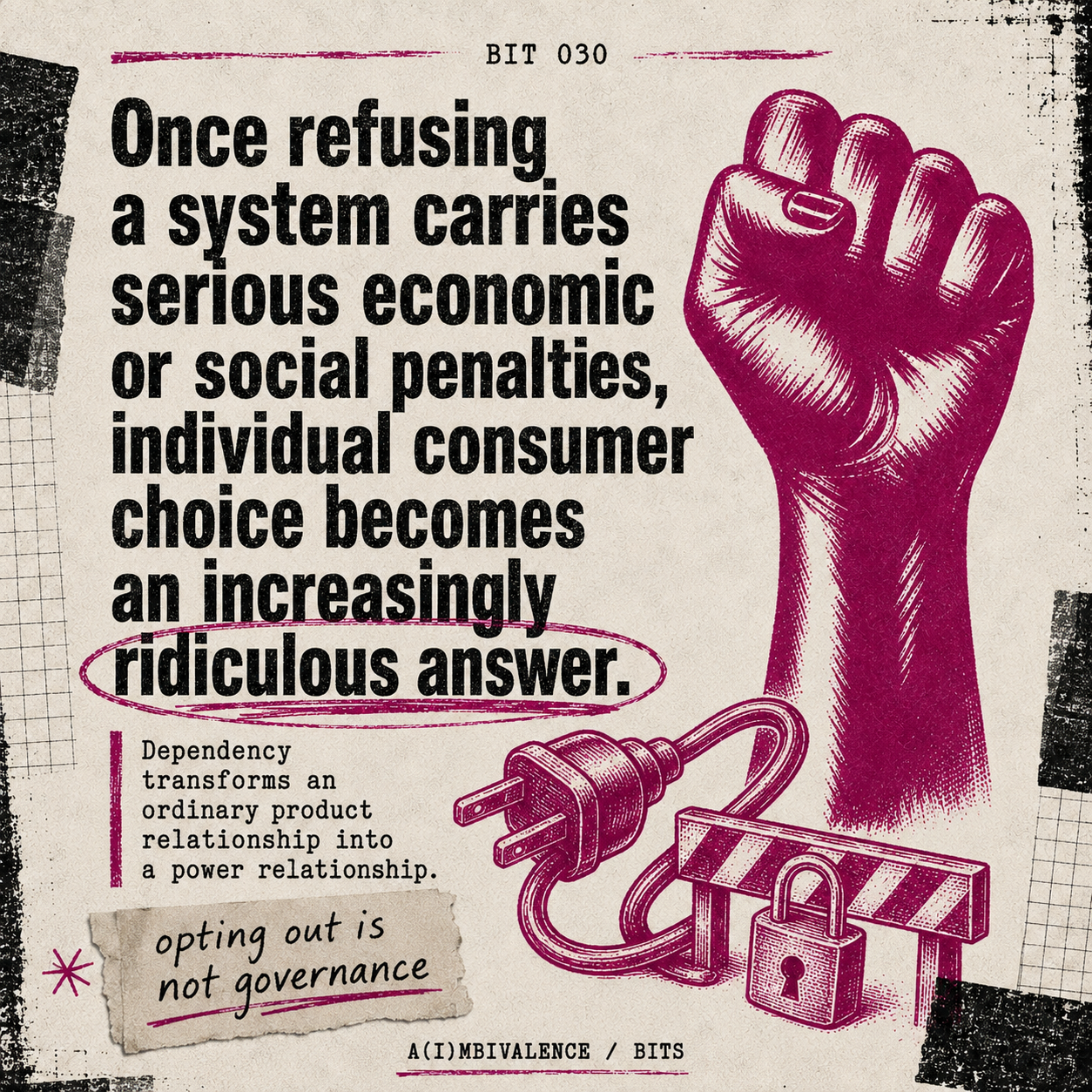
We spend an extraordinary amount of time discussing how intelligent AI will become and much less time discussing what happens when using it stops being a meaningful choice. When your employer expects it, your software quietly embeds it, schools design assignments around it, public administration adopts it, search becomes inseparable from it and entire professions restructure themselves around the assumption that everybody has access, “Do you use AI?” eventually becomes a rather strange question.
We use electricity too, but nobody concludes from that that electricity is politically uninteresting. Quite the opposite. Because modern life depends on it, we care enormously about infrastructure, access, reliability, pricing, regulation and who is allowed to switch it off. Dependency transforms an ordinary product relationship into a power relationship. The same applies to digital infrastructure. Once refusing a system carries serious economic or social penalties, individual consumer choice becomes an increasingly ridiculous answer to questions about its governance.
This is where the endless emphasis on “responsible AI use” reaches its limit. Personal choices matter, but responsibility cannot remain primarily with users once institutions make meaningful refusal impossible. The moment opting out stops being realistic, “just choose responsibly” stops being serious politics. Dependency is power, and the more indispensable AI infrastructure becomes, the less its governance can be left to the companies from which everybody else has to rent access.