BIT 026
Democracy Is Inefficient
September 25, 2026
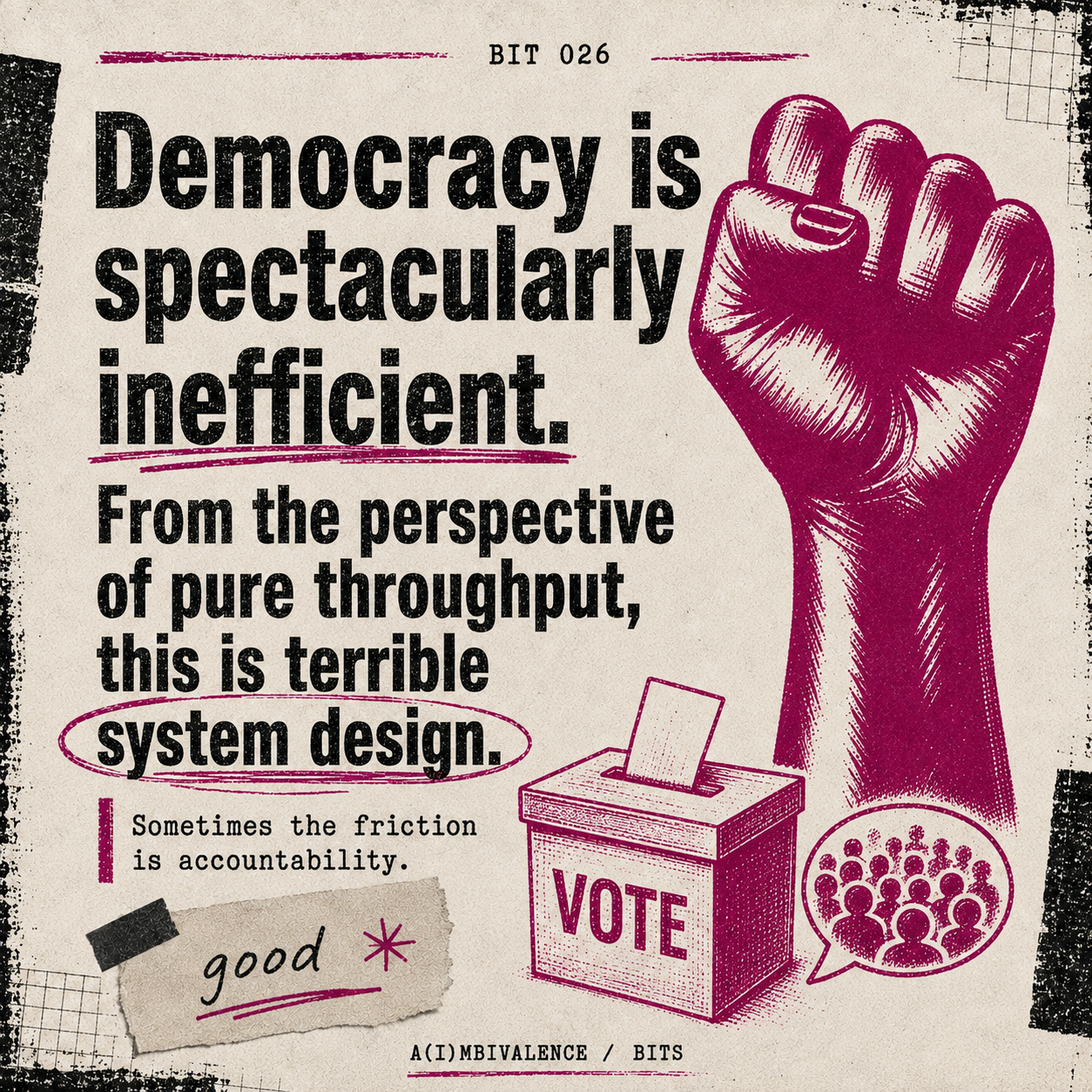
The language surrounding AI treats efficiency as if it were self-evidently good. Faster decisions, fewer steps, less friction, automated processes, optimized allocation. And often it is good. Nobody needs a government process to take three weeks when it could take three minutes. But efficiency becomes dangerous when it escapes the process and turns into a political value, because democracy is spectacularly inefficient.
People disagree. Opposition parties obstruct things. Citizens organize against decisions somebody already made. Journalists ask inconvenient questions. Courts stop projects. Minorities insist on being considered. Workers organize. Decisions are appealed, reviewed, renegotiated and sometimes reversed entirely. From the perspective of pure throughput, this is terrible system design. Authoritarianism can look wonderfully efficient because fewer people are allowed to interfere. There is a reason power has always found the language of order, speed and necessity so attractive.
Democratic friction therefore needs defending, especially while we are building systems designed to remove friction everywhere else. Not every obstacle is waste. Not every delay is failure. Not every person making a process more difficult is a problem to be automated away. Sometimes the friction is accountability. Sometimes it is a right. Sometimes it is somebody refusing to be steamrolled by a decision that is wonderfully efficient for everyone except the people underneath it. If efficiency becomes our highest political value, democracy will eventually look like a performance problem.