BIT 050
Democracy as Managed Participation
October 29, 2026
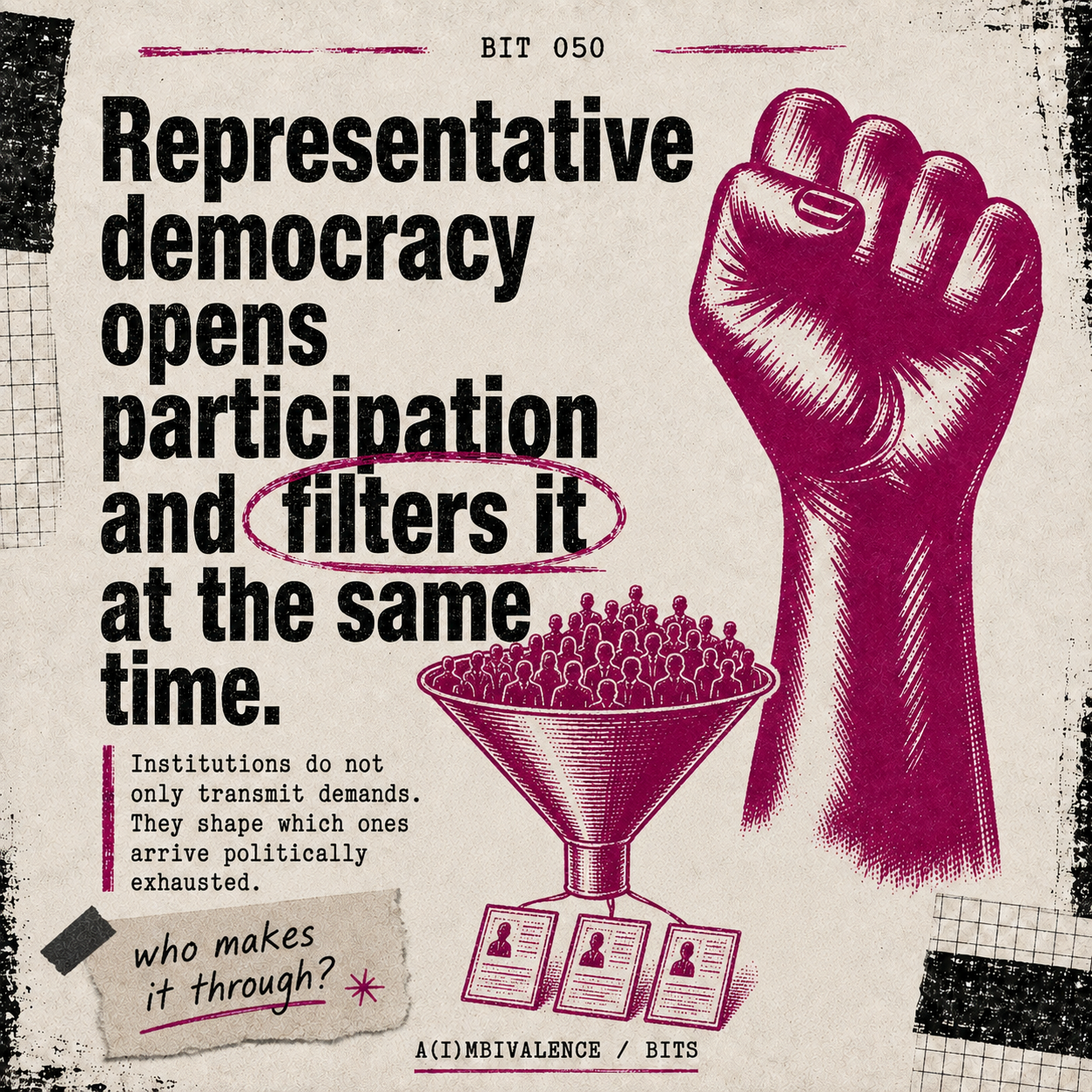
We often learn representative democracy as a fairly clean story of progress: participation expanded, more people gained the vote, institutions became more democratic, and eventually we arrived at the sensible arrangement we have today. The history is less flattering. Many democratic institutions expanded participation while simultaneously filtering, slowing and containing popular power. Representation does not merely transmit what people want. It determines which demands become decisions, which are diluted on the way, and which arrive politically exhausted.
That does not make representative democracy fraudulent. I would take democratic institutions over authoritarian rule without hesitation. But defending democracy does not require treating the institutional form we inherited as its final version. Parliaments, parties, bureaucracies, electoral systems and layers of representation are historical arrangements. We built them. We can ask what they enable, whom they keep at a distance from actual decision-making, and what additional forms of democracy we might need.