BITS
Thinking in public.
Short notes, arguments and unfinished thoughts from the work on A(I)mbivalence.
BIT 048
Oct 27, 2026
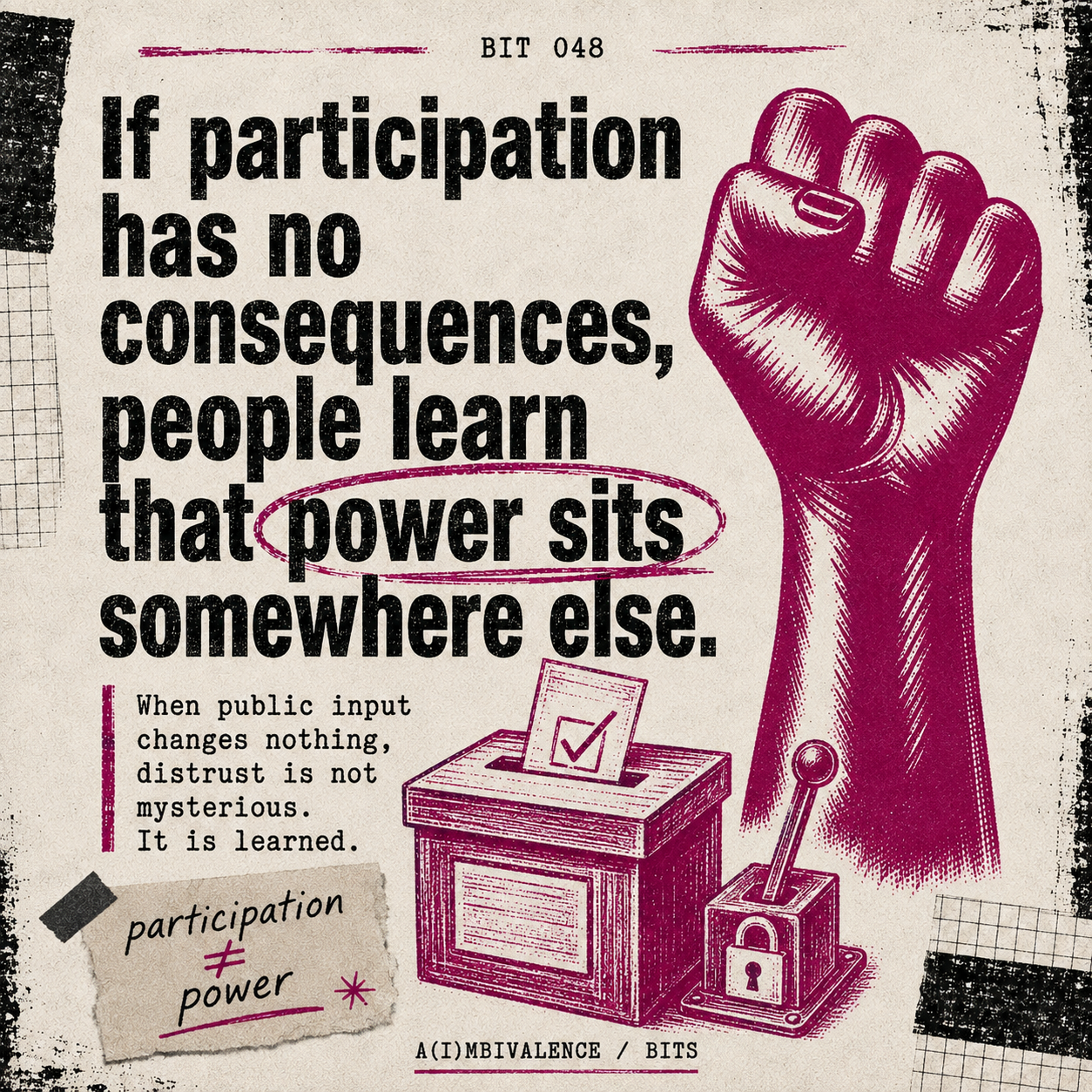
NewWhen Participation Has No Consequences
On why celebrating democratic participation while ignoring what people decide is not democracy, but its performance.
Read moreBIT 047
Oct 26, 2026
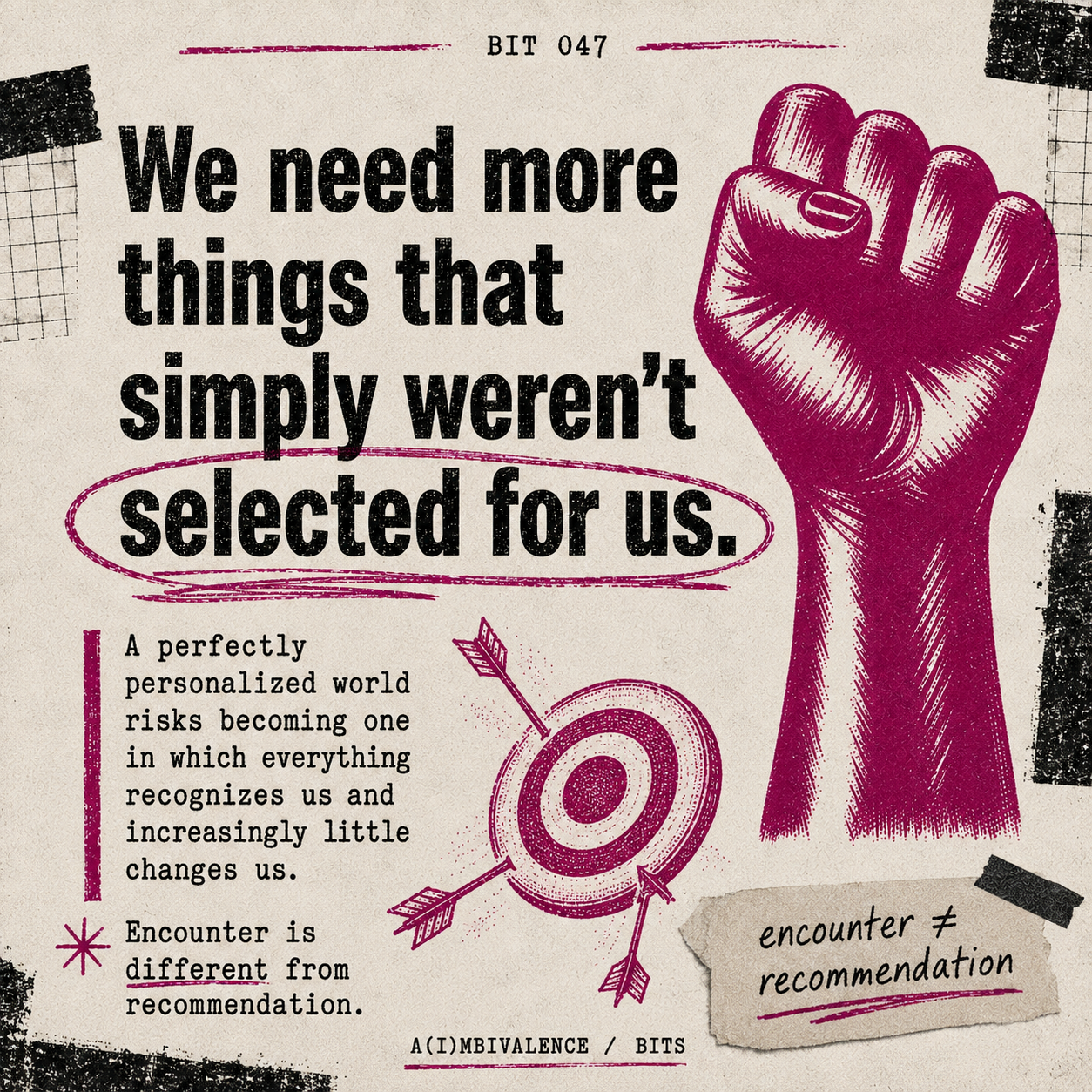
NewThe Opposite of Personalization
On the value of things nobody selected for us, and why a perfectly personalized world risks changing us less and less.
Read moreBIT 046
Oct 23, 2026
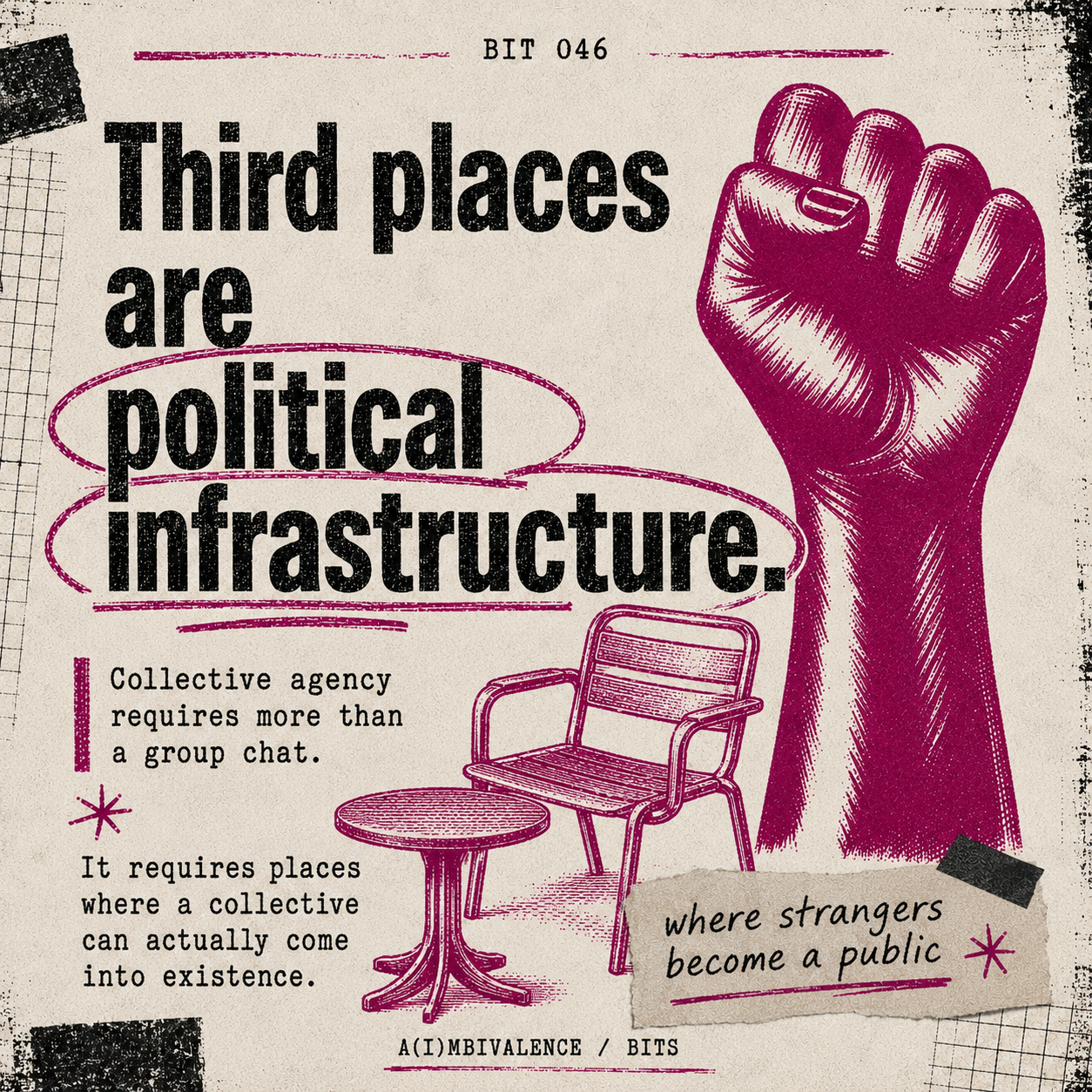
NewThird Places Are Political Infrastructure
On libraries, parks and pubs as political infrastructure, and why losing them means losing a way strangers become a public.
Read moreBIT 045
Oct 22, 2026
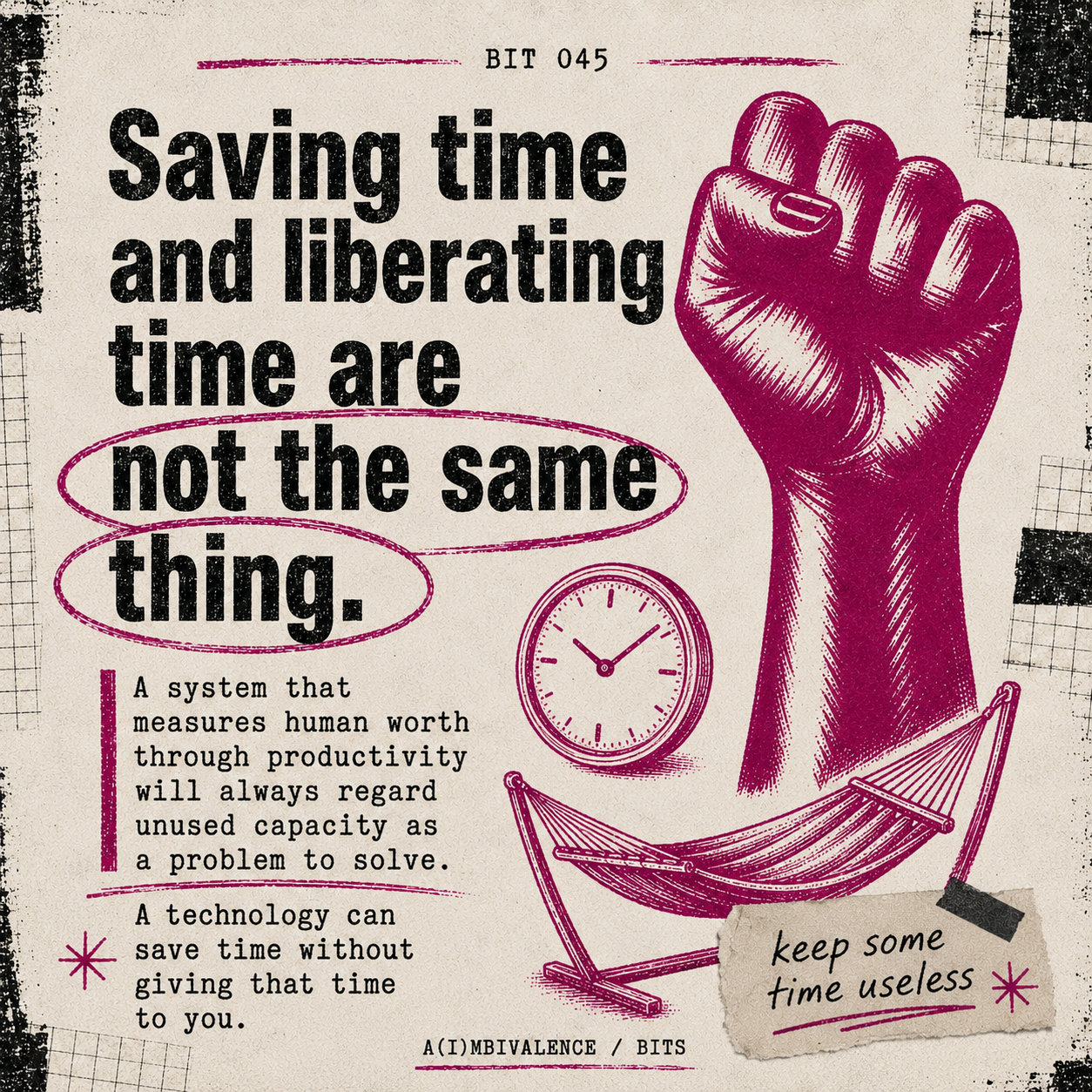
The Right to Waste Time
On the difference between saving time and liberating it, and why some of it should be allowed to stay useless.
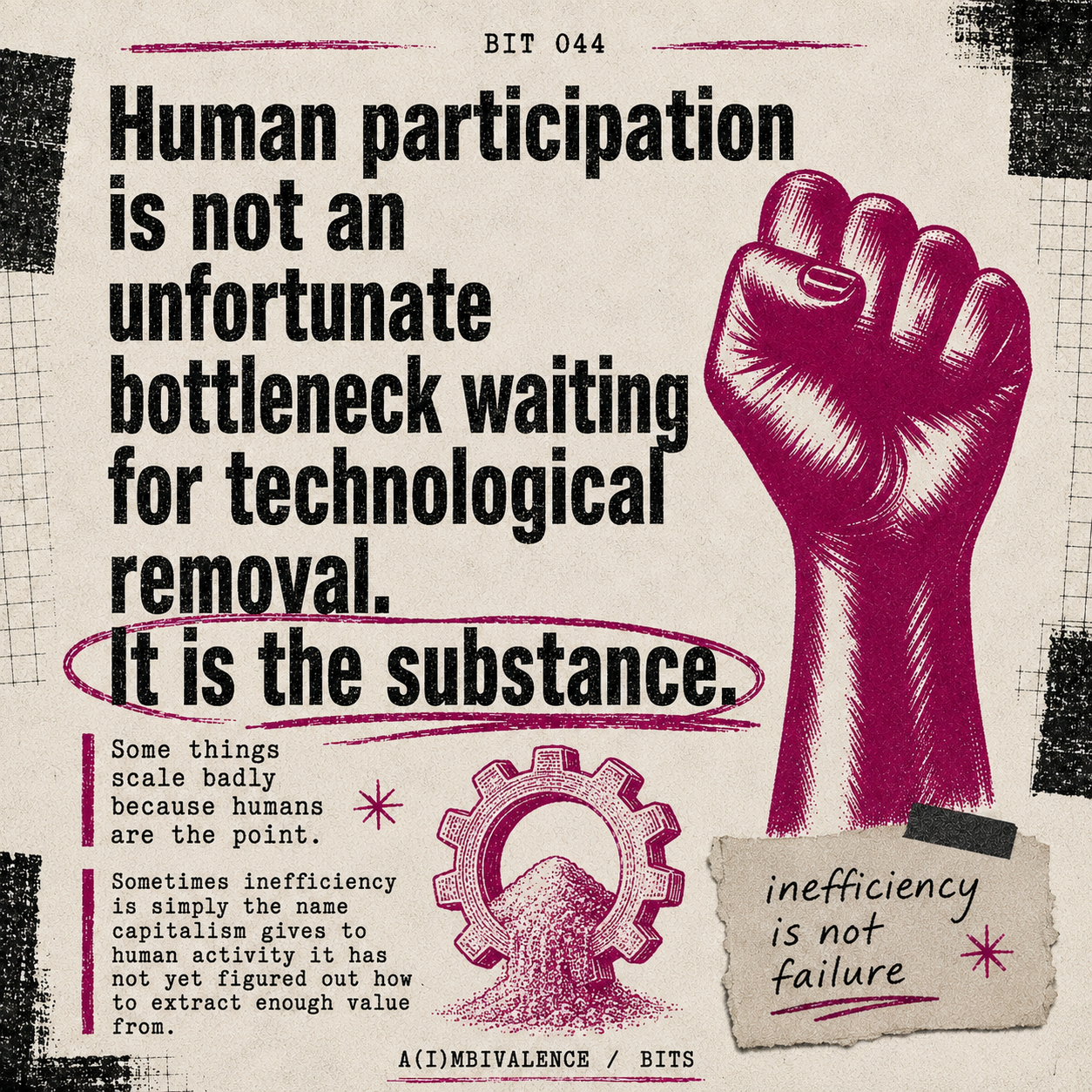
Read moreBIT 044
Oct 21, 2026
Inefficiency as Resistance
On the political rehabilitation of inefficiency, and why human involvement is not a cost to be optimized away.
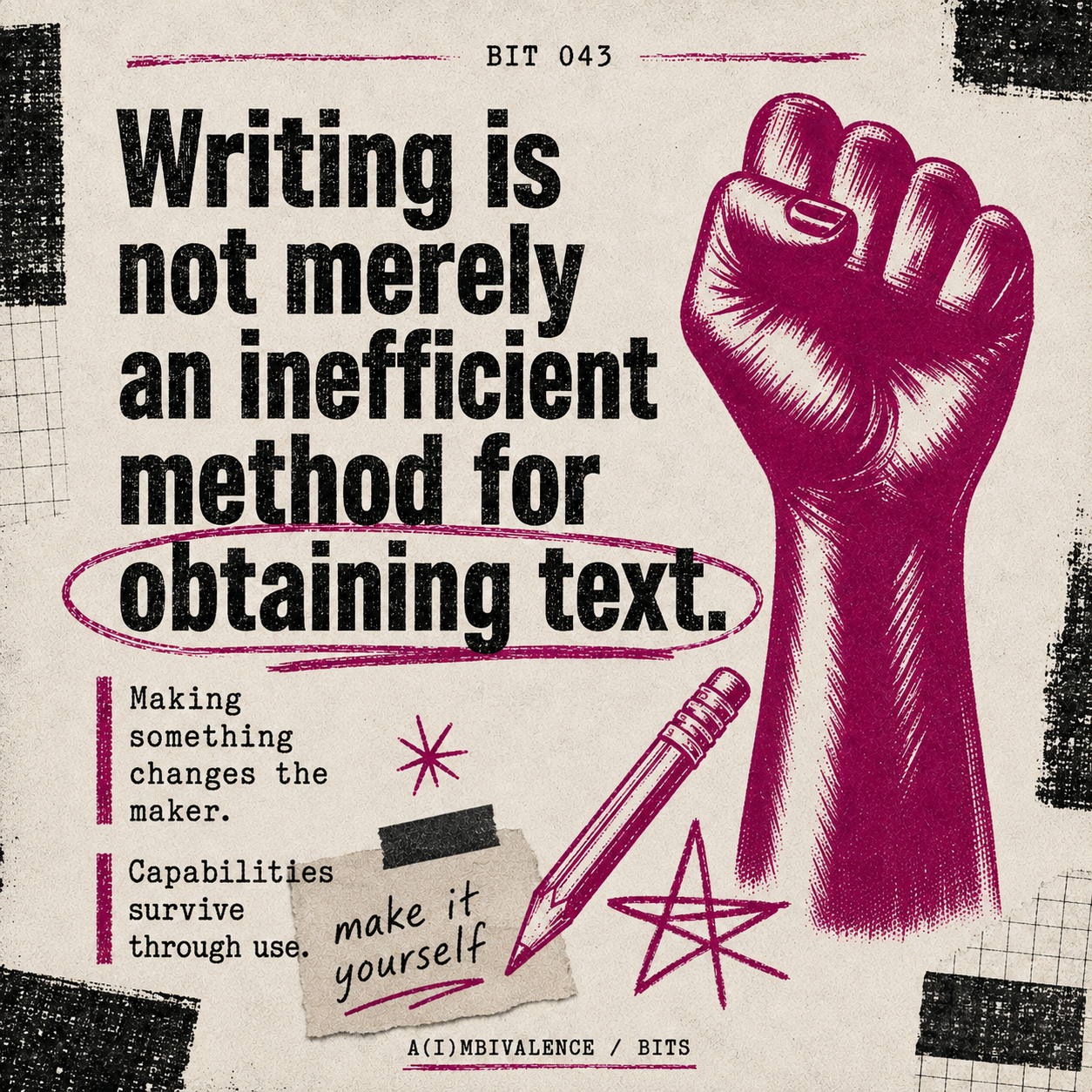
Read moreBIT 043
Oct 20, 2026
Create What Cannot Be Optimized
On making things the inefficient way, and why the practice of creating shapes the person doing it.
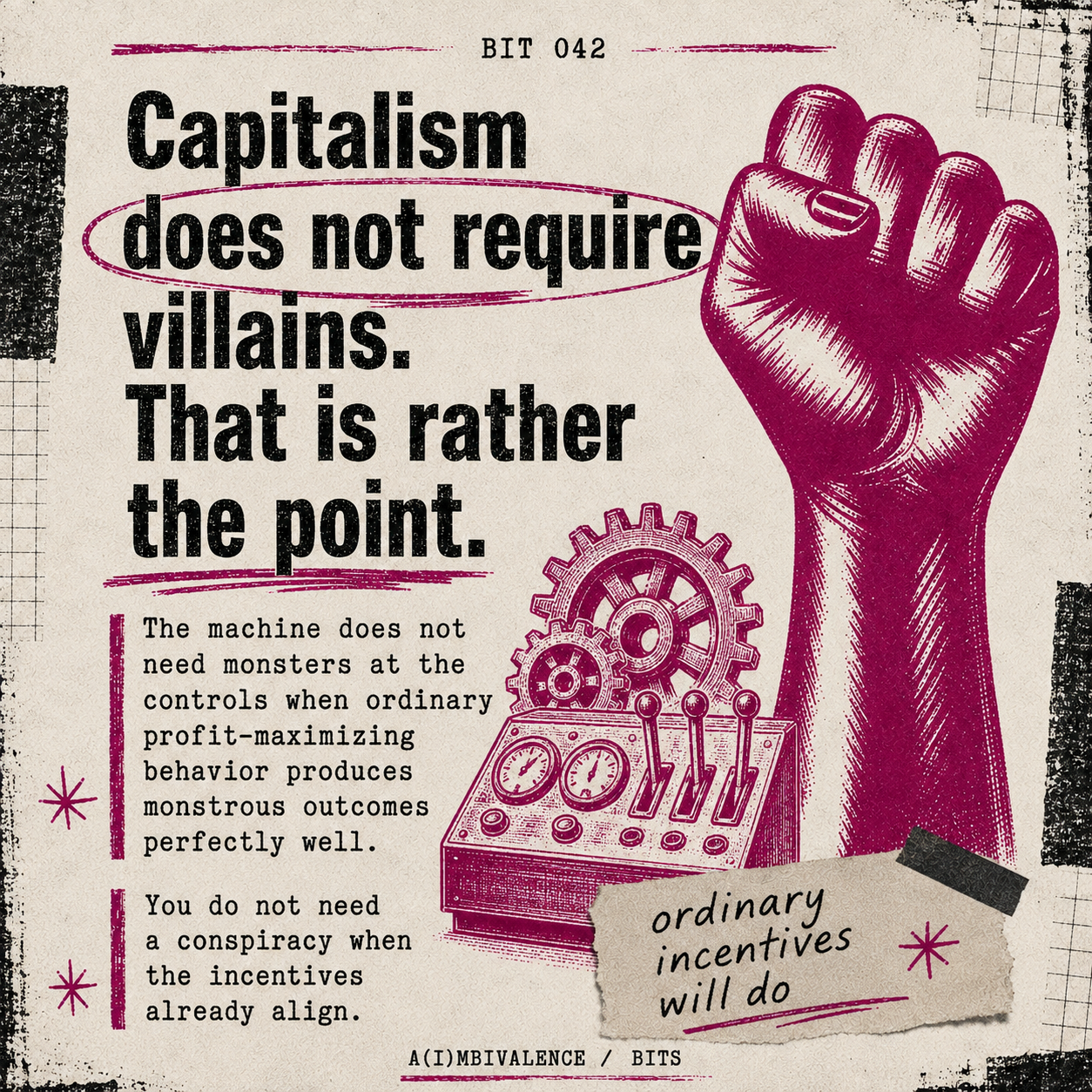
Read moreBIT 042
Oct 19, 2026
You Don't Need Evil Billionaires
On why capitalism doesn't require villains, and why focusing on individual billionaires lets the system off the hook.
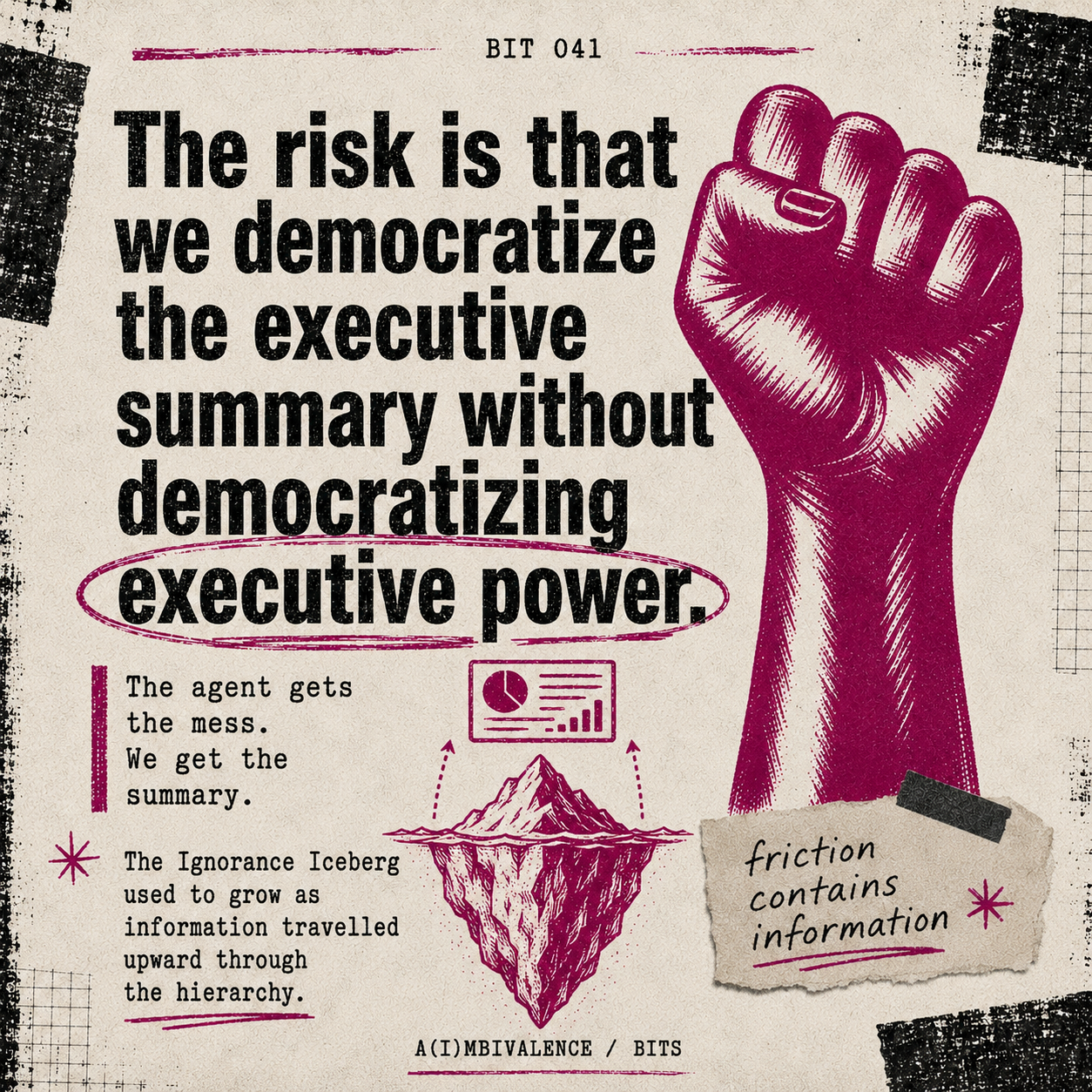
Read moreBIT 041
Oct 16, 2026
Scaling the Ignorance Iceberg
On how AI extends the manager's distance from complexity to everyone, and why removing friction can also remove understanding.
Read moreBIT 040
Oct 15, 2026
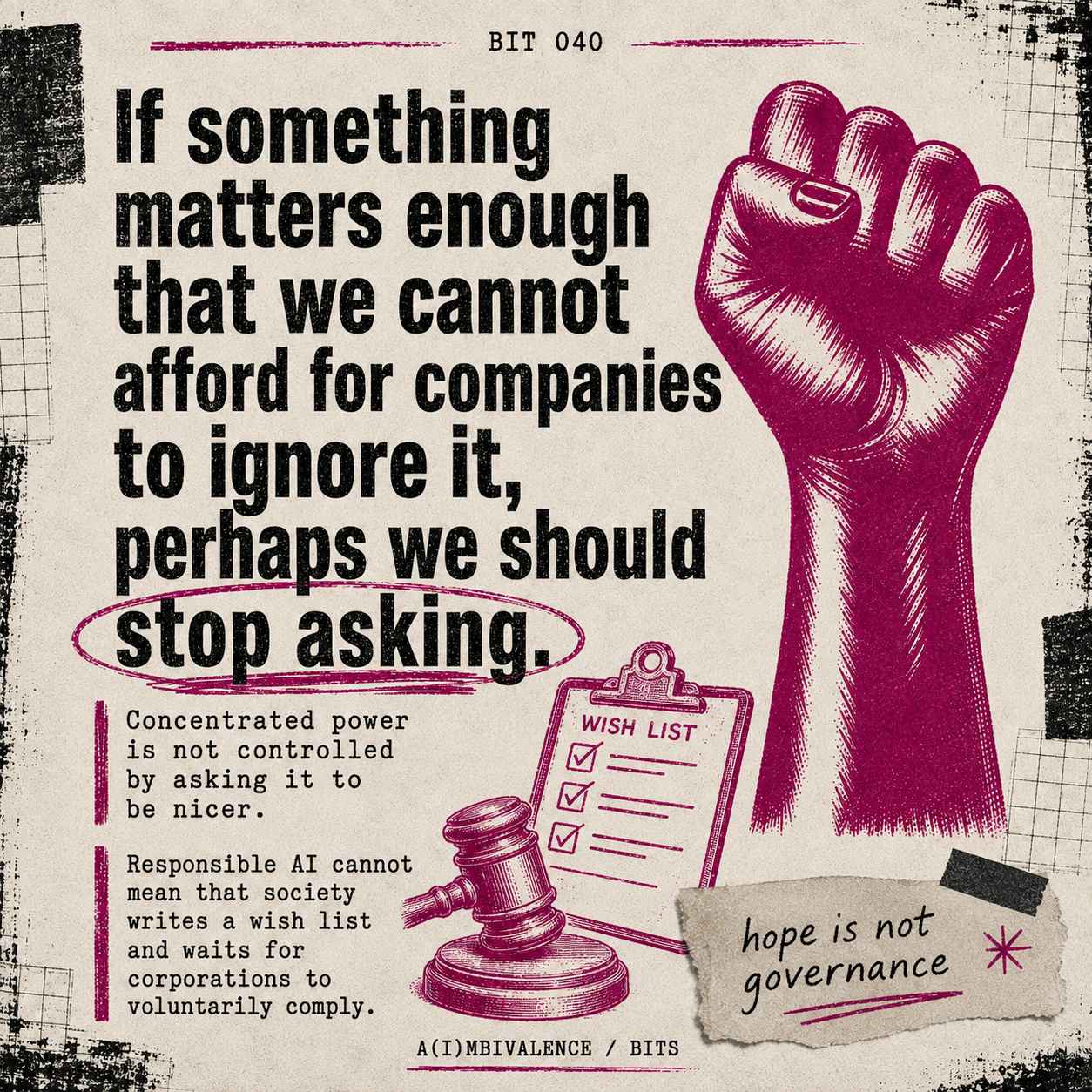
Stop Asking Them Nicely
On voluntary corporate responsibility, and why concentrated power is not controlled by asking it to behave better.
Read moreBIT 039
Oct 14, 2026
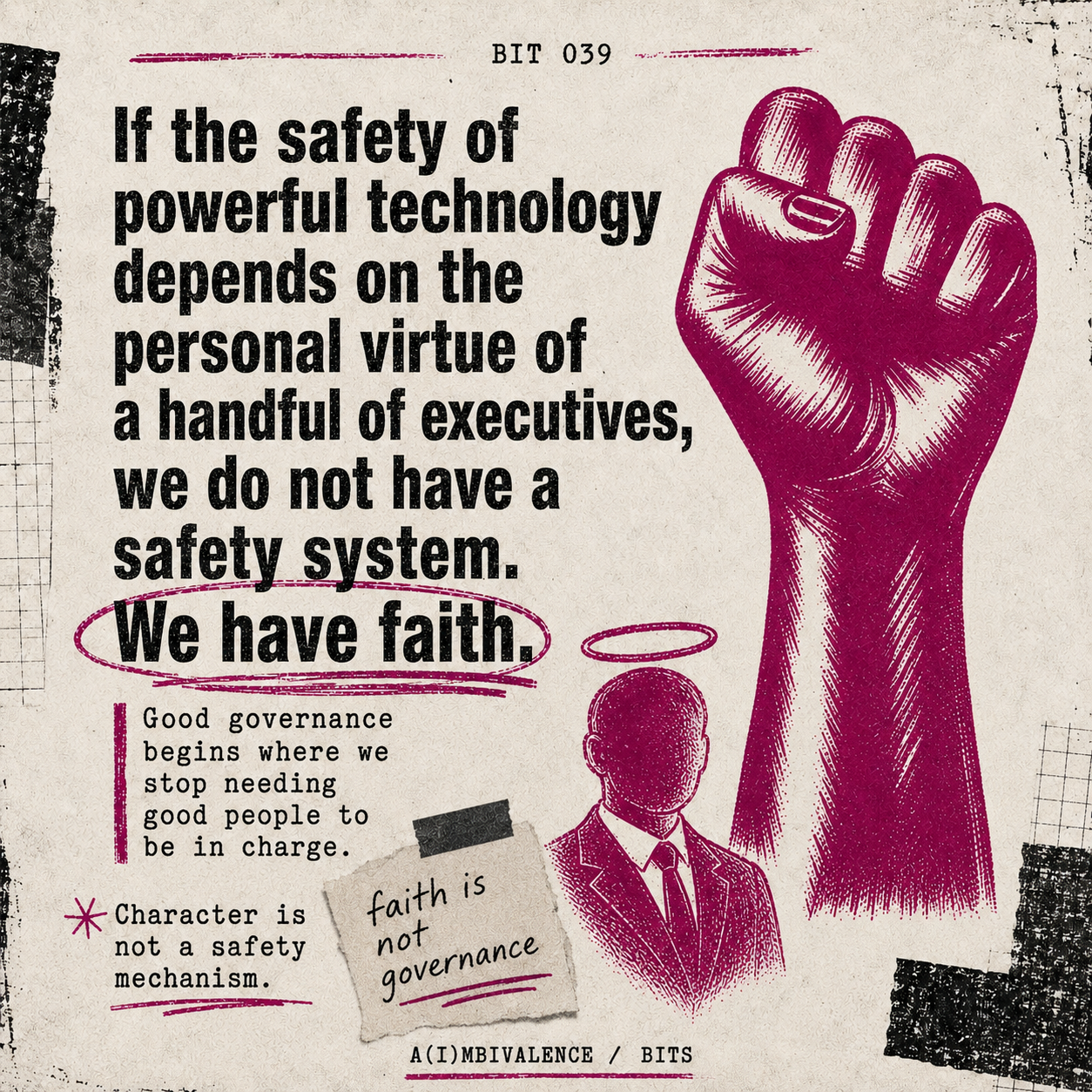
Safety Cannot Depend on CEO Character
On trusting individual executives to be responsible, and why good governance begins where we stop needing good people in charge.
Read moreBIT 038
Oct 13, 2026
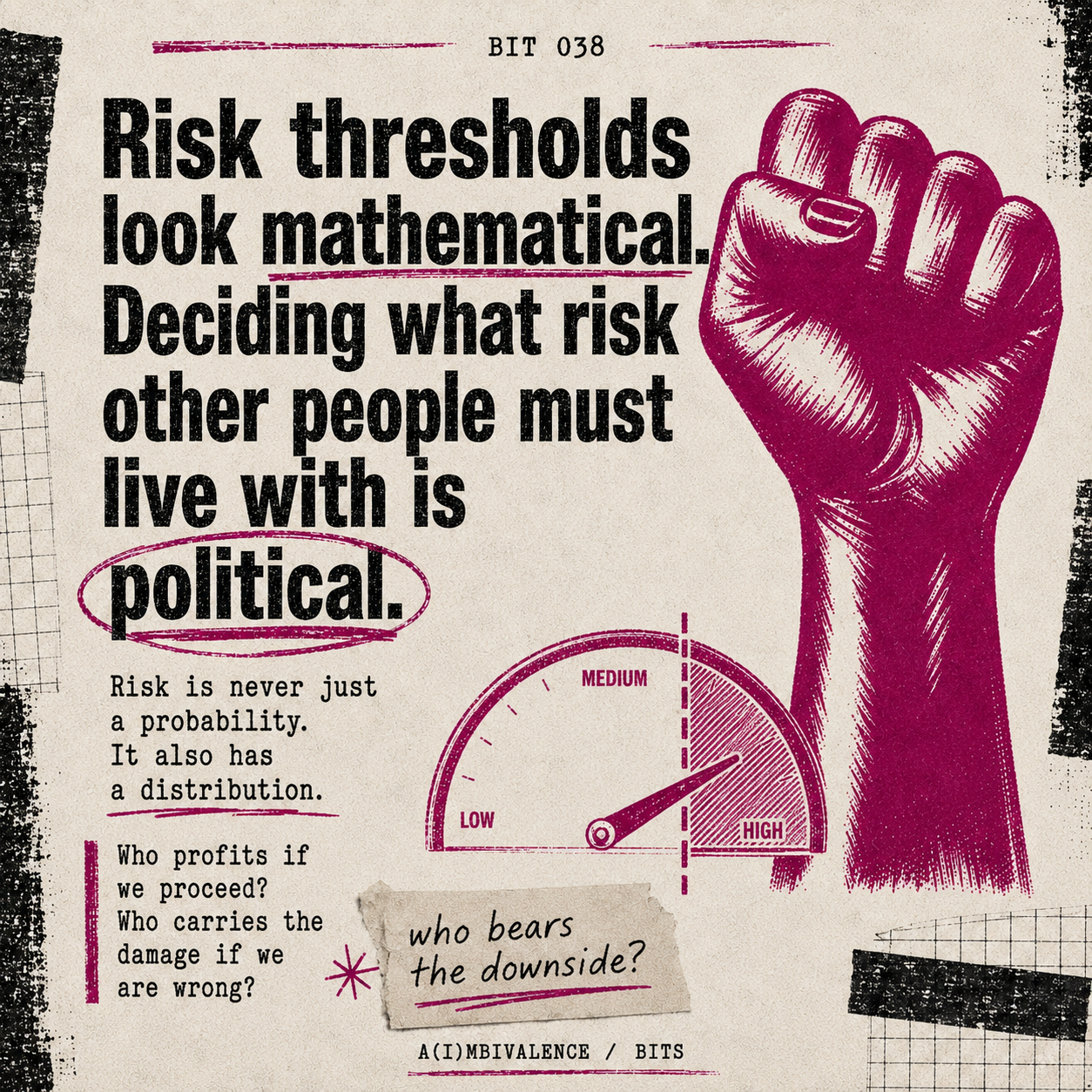
The Threshold Problem
On risk thresholds in AI safety frameworks, and why deciding what risk is acceptable is a political judgment, not a calculation.
Read moreBIT 037
Oct 12, 2026
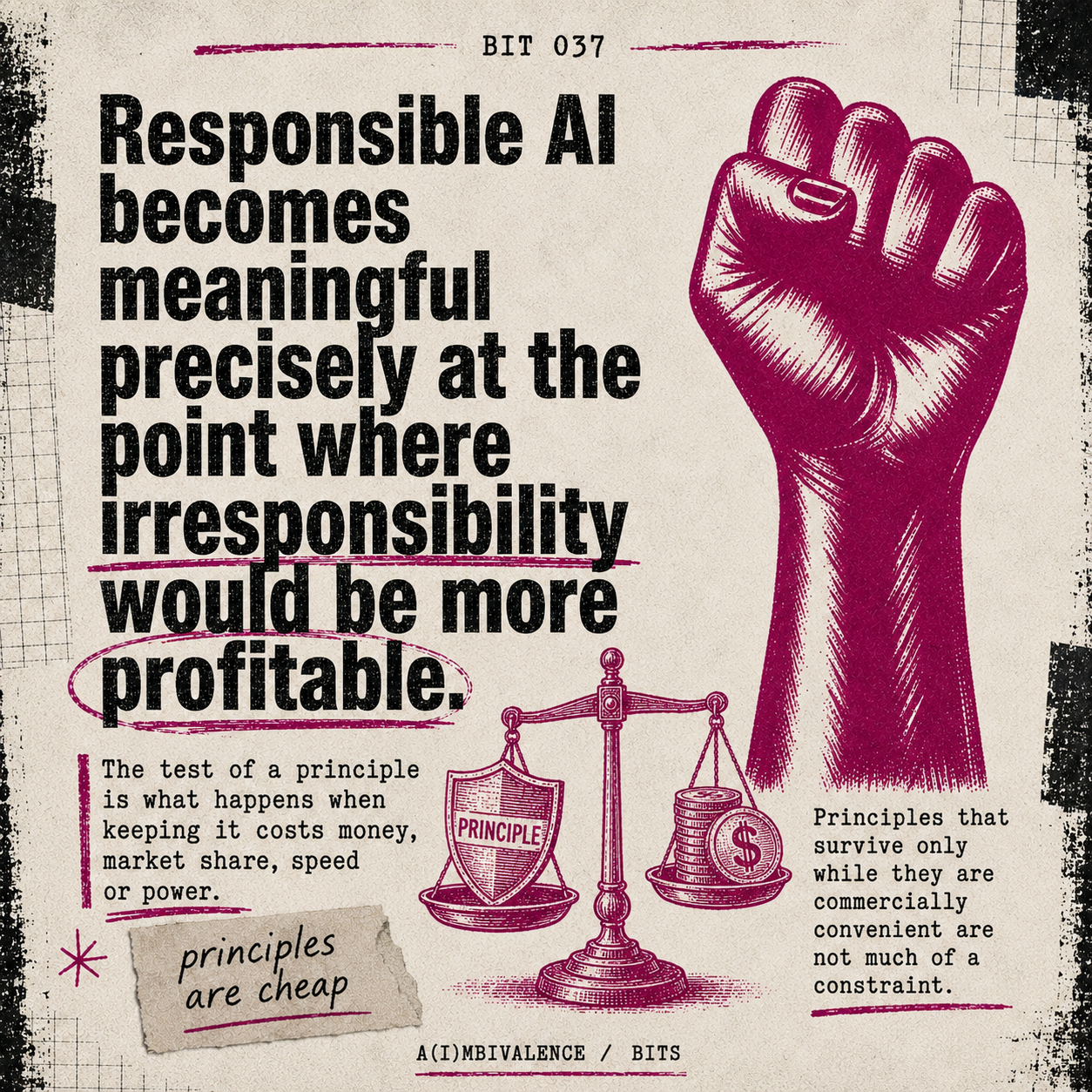
Responsible AI Until It Costs Something
On corporate AI principles, and why a commitment only proves itself once following it becomes expensive.
Read moreBIT 036
Oct 9, 2026
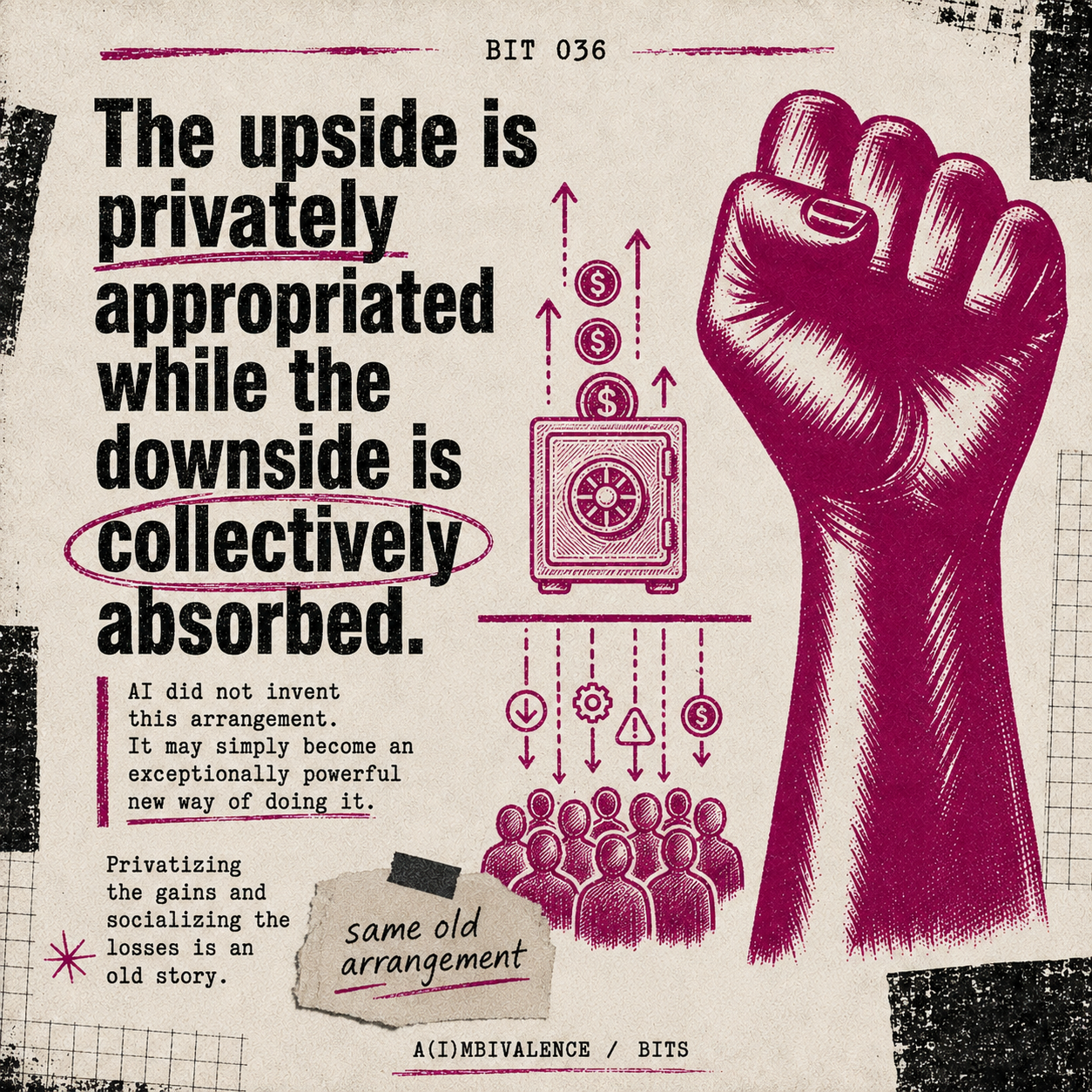
Privatized Upside, Socialized Downside
On who captures the value of AI and who absorbs the cost, and why that distribution shapes how much risk gets taken.
Read moreBIT 035
Oct 8, 2026
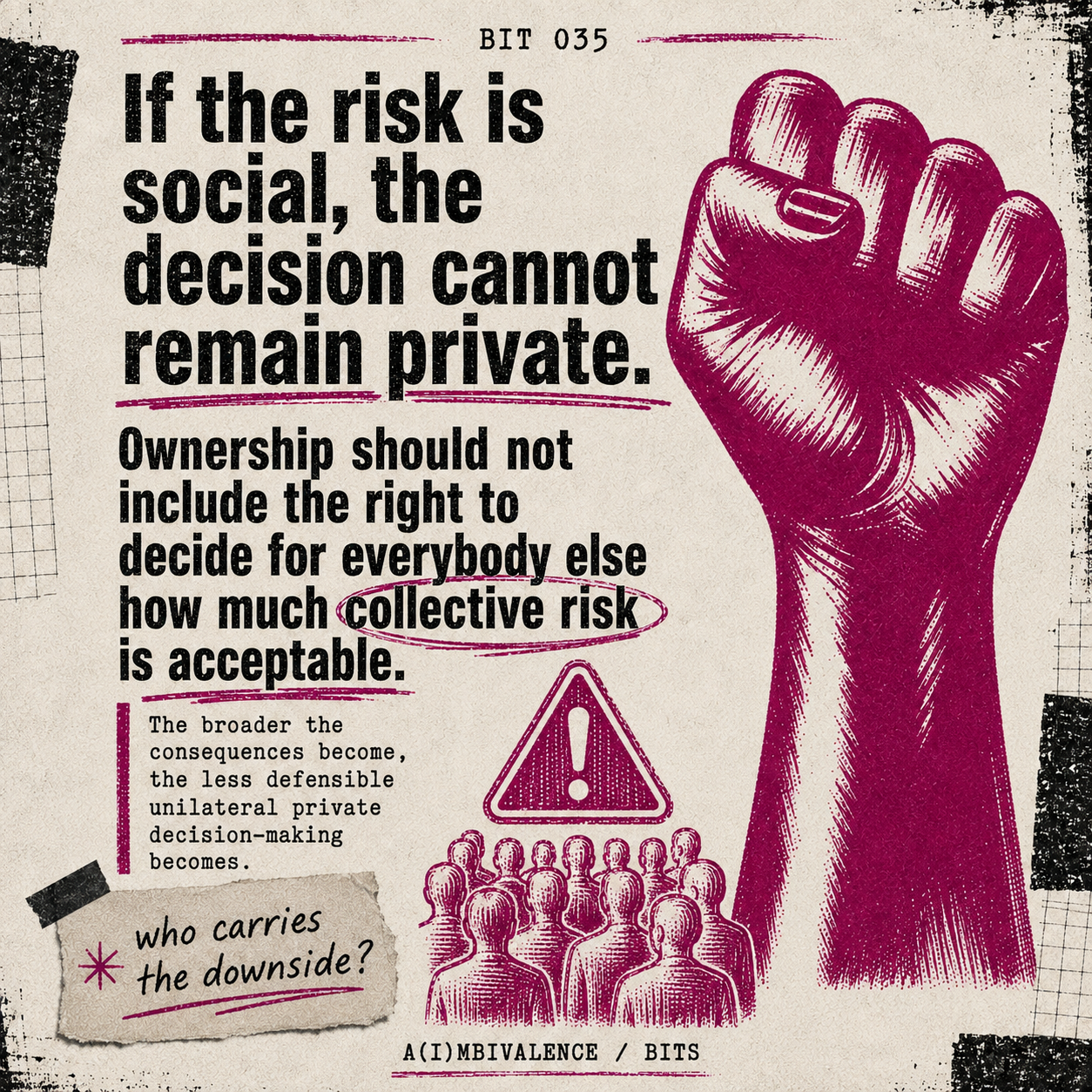
If the Risk Is Social, the Decision Cannot Remain Private
On unilateral AI development decisions, and why ownership does not entitle a company to decide collective risk.
Read moreBIT 034
Oct 7, 2026
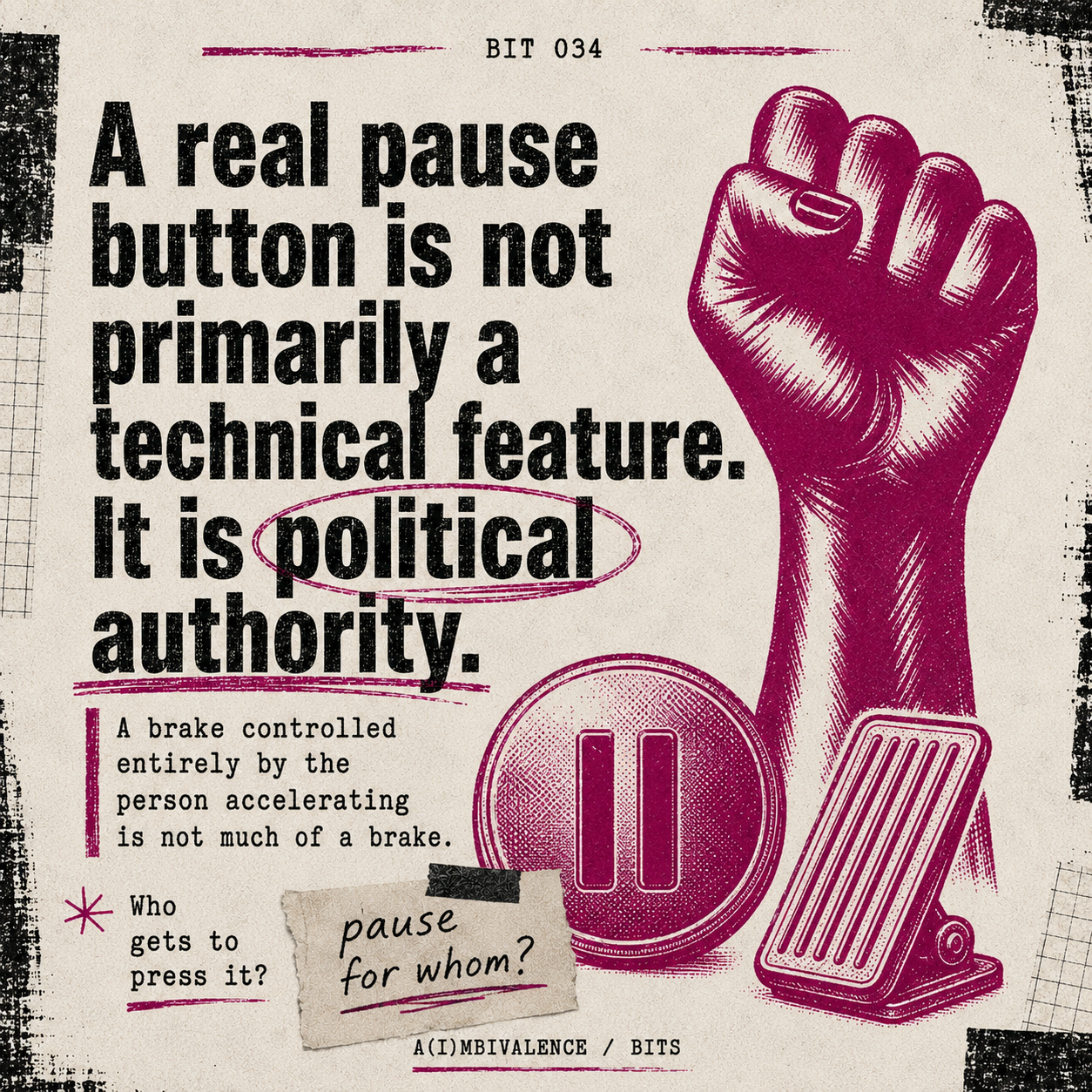
The Pause Button Nobody Owns
On the idea of a "pause button" for AI, and why the real question is who gets to press it.
Read moreBIT 033
Oct 6, 2026
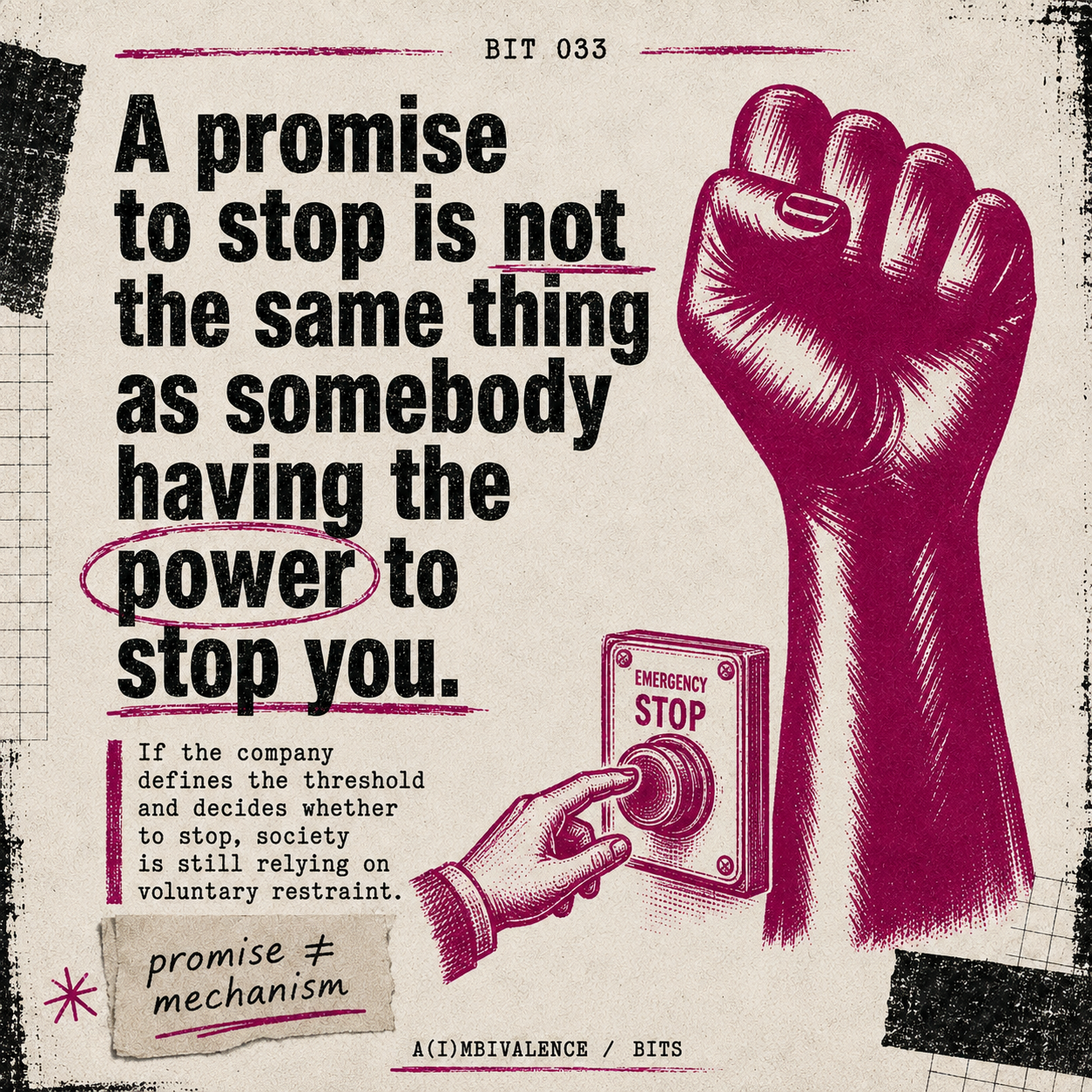
A Safety Promise Is Not a Safety Mechanism
On voluntary AI safety frameworks, and the difference between a promise to stop and the power to stop someone.
Read moreBIT 032
Oct 5, 2026
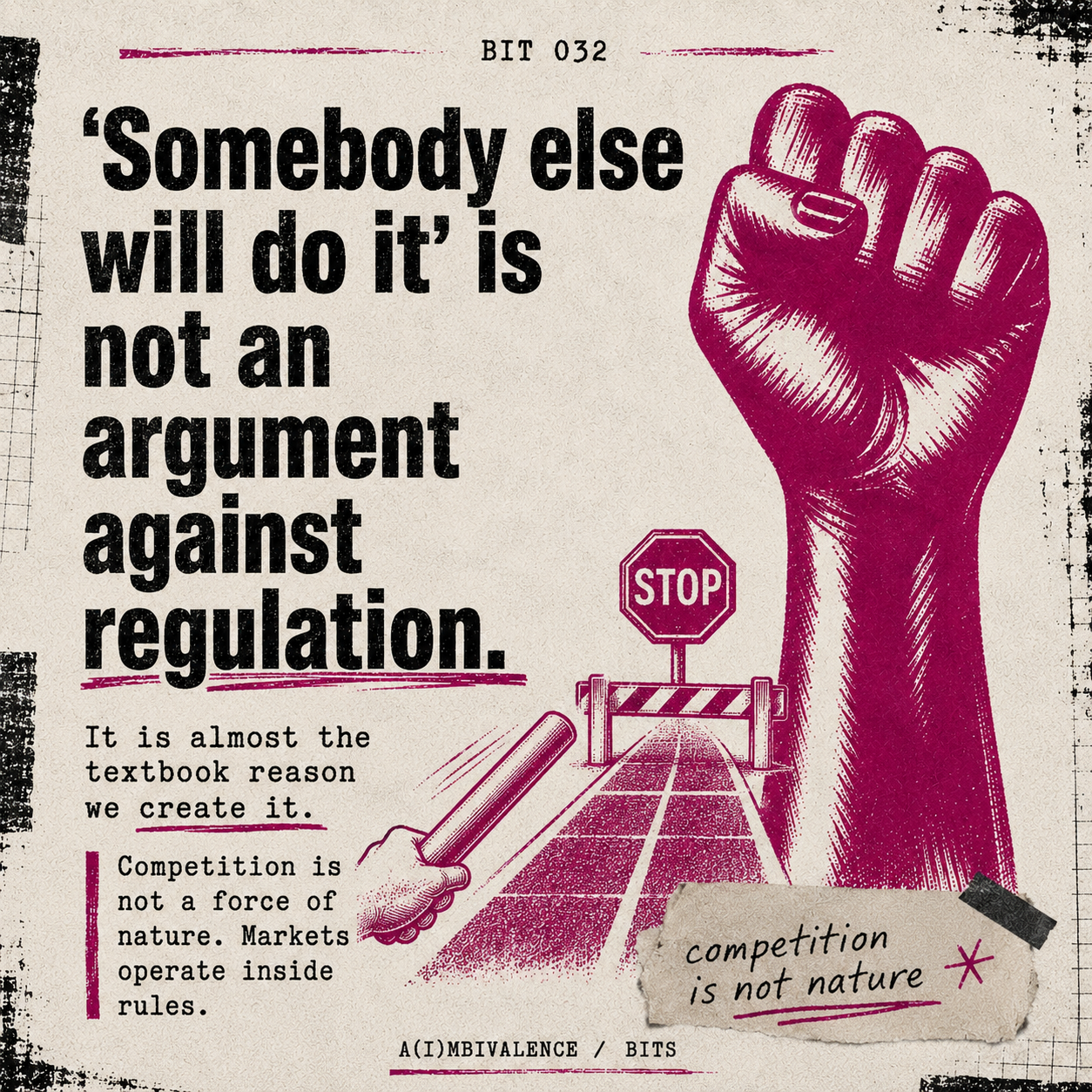
Competition Is Not an Excuse
On "somebody else will do it anyway" as an argument against regulation, and why it is actually the argument for it.
Read moreBIT 031
Oct 2, 2026
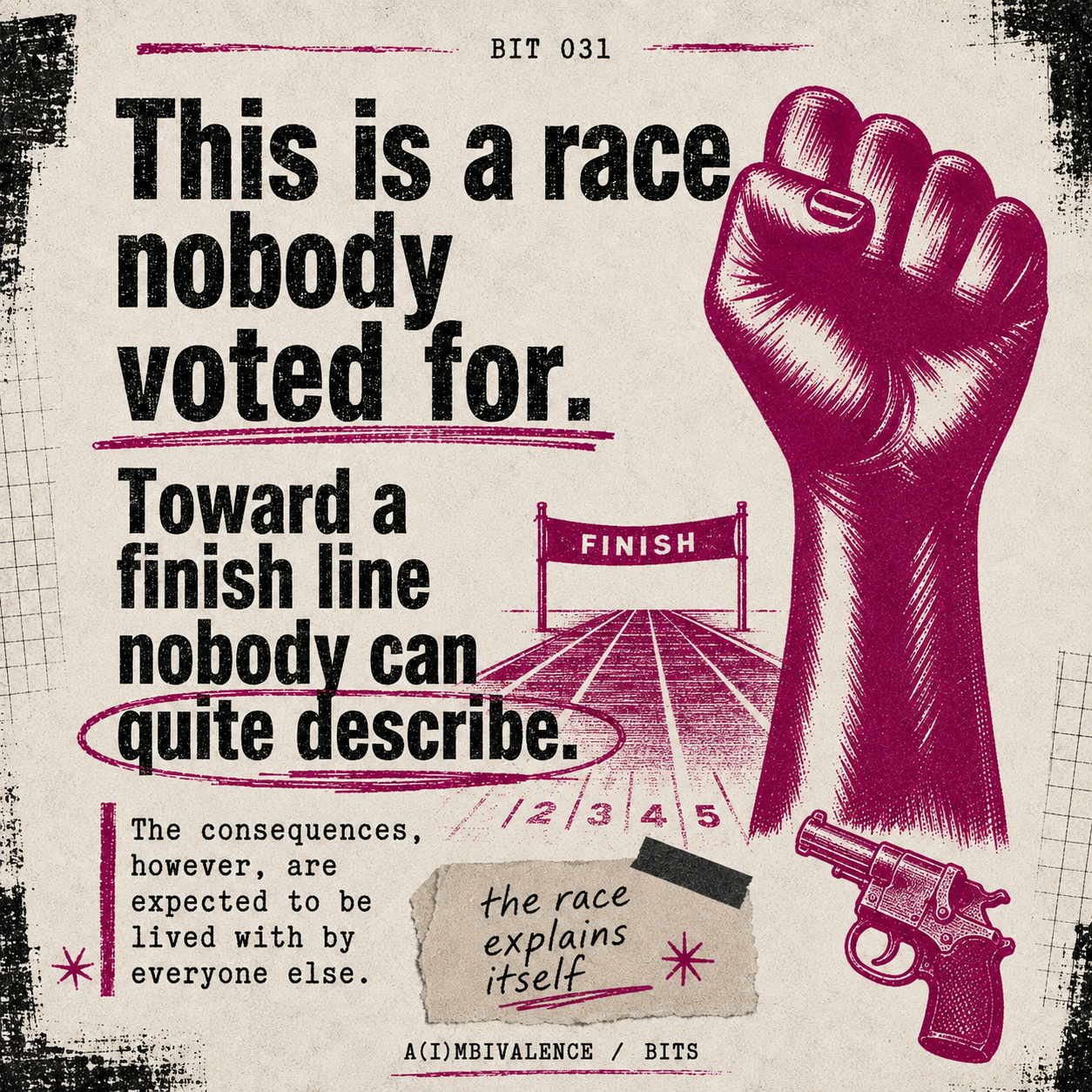
The Race Nobody Voted For
On the "AI race" framing, and why calling something inevitable is itself a political choice.
Read moreBIT 030
Oct 1, 2026
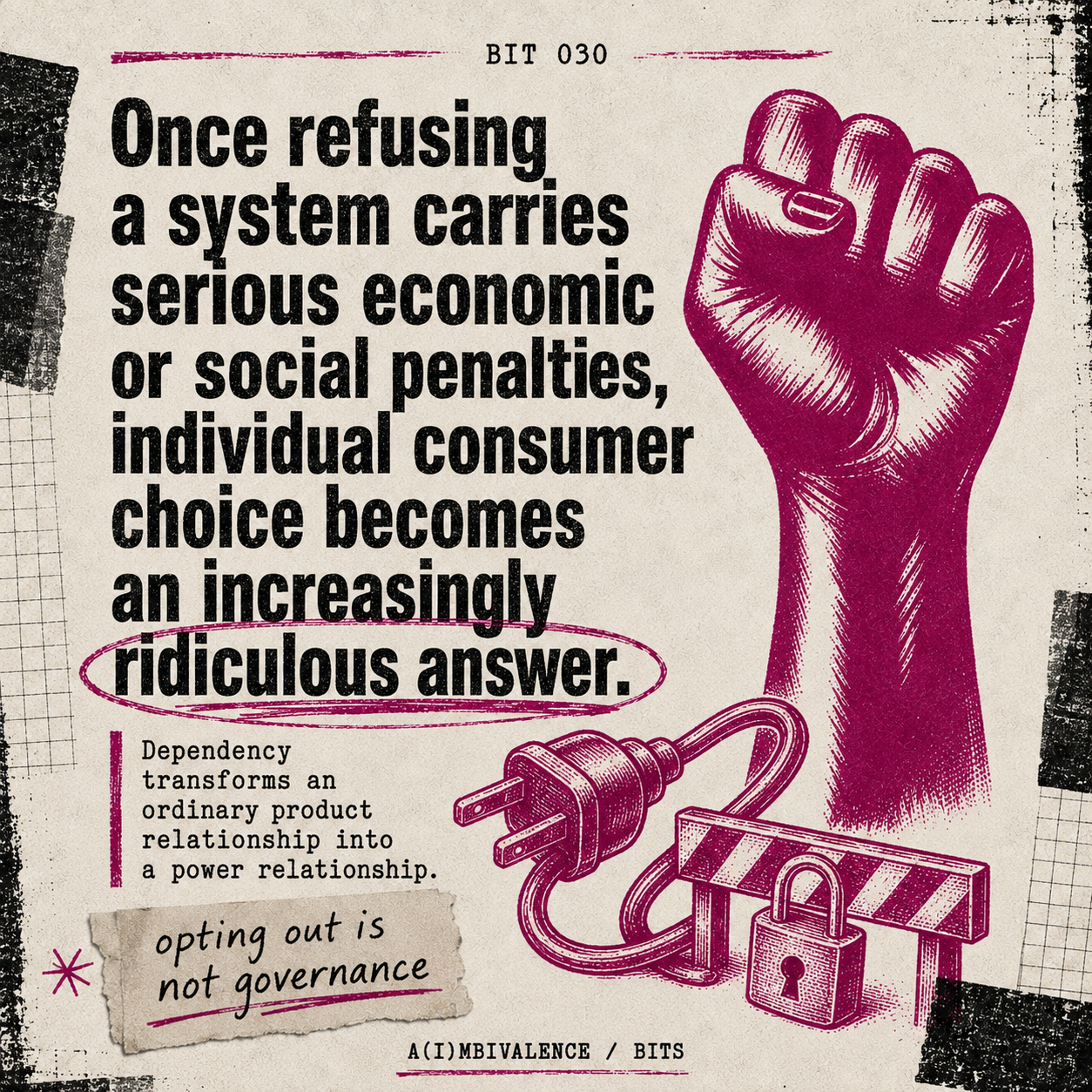
Dependency Is Power
On why dependency on AI infrastructure turns an ordinary product relationship into a power relationship.
Read moreBIT 029
Sep 30, 2026
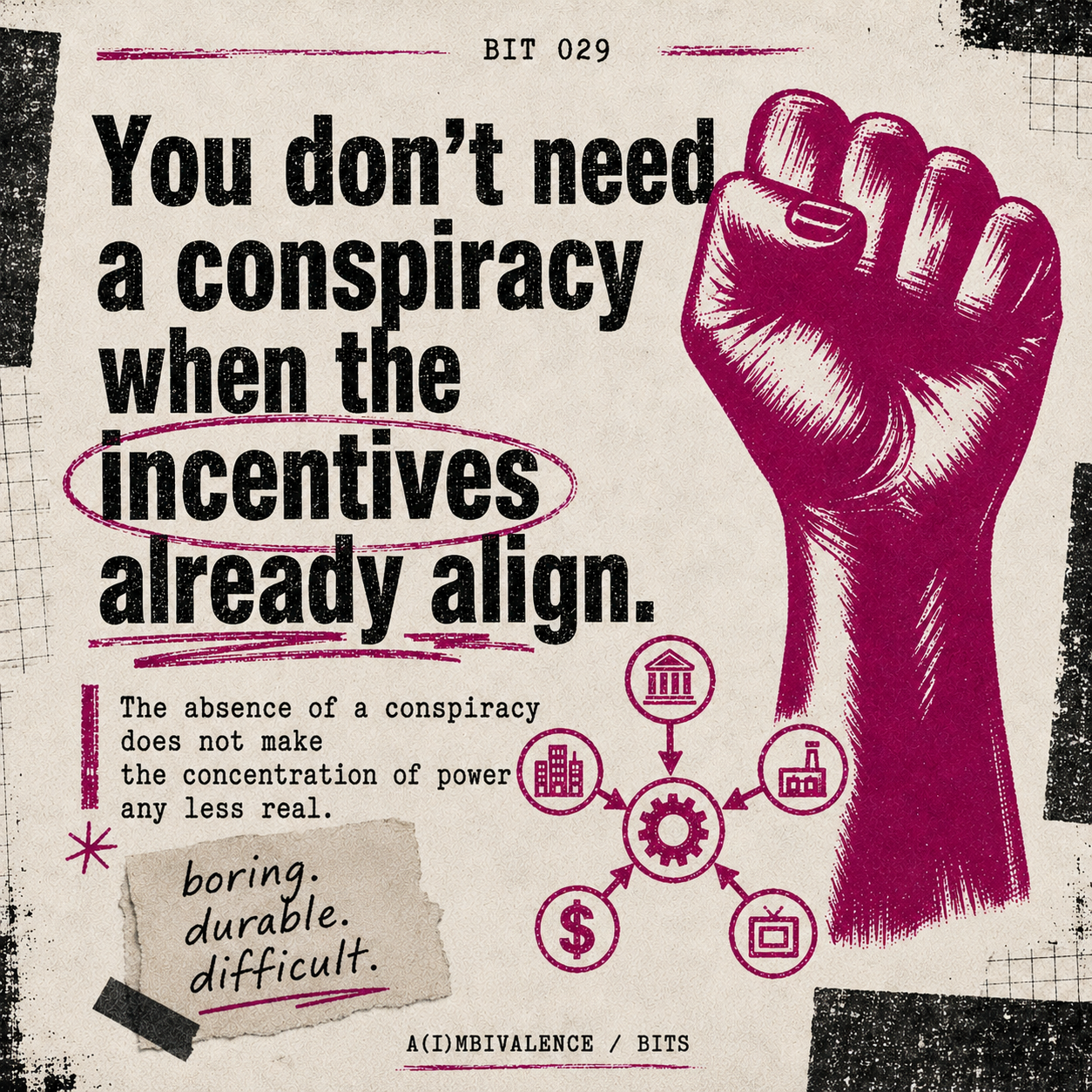
There Doesn't Need to Be a Conspiracy
On how aligned incentives, not secret coordination, produce concentrated power, and why that makes the problem harder to fight.
Read moreBIT 028
Sep 29, 2026
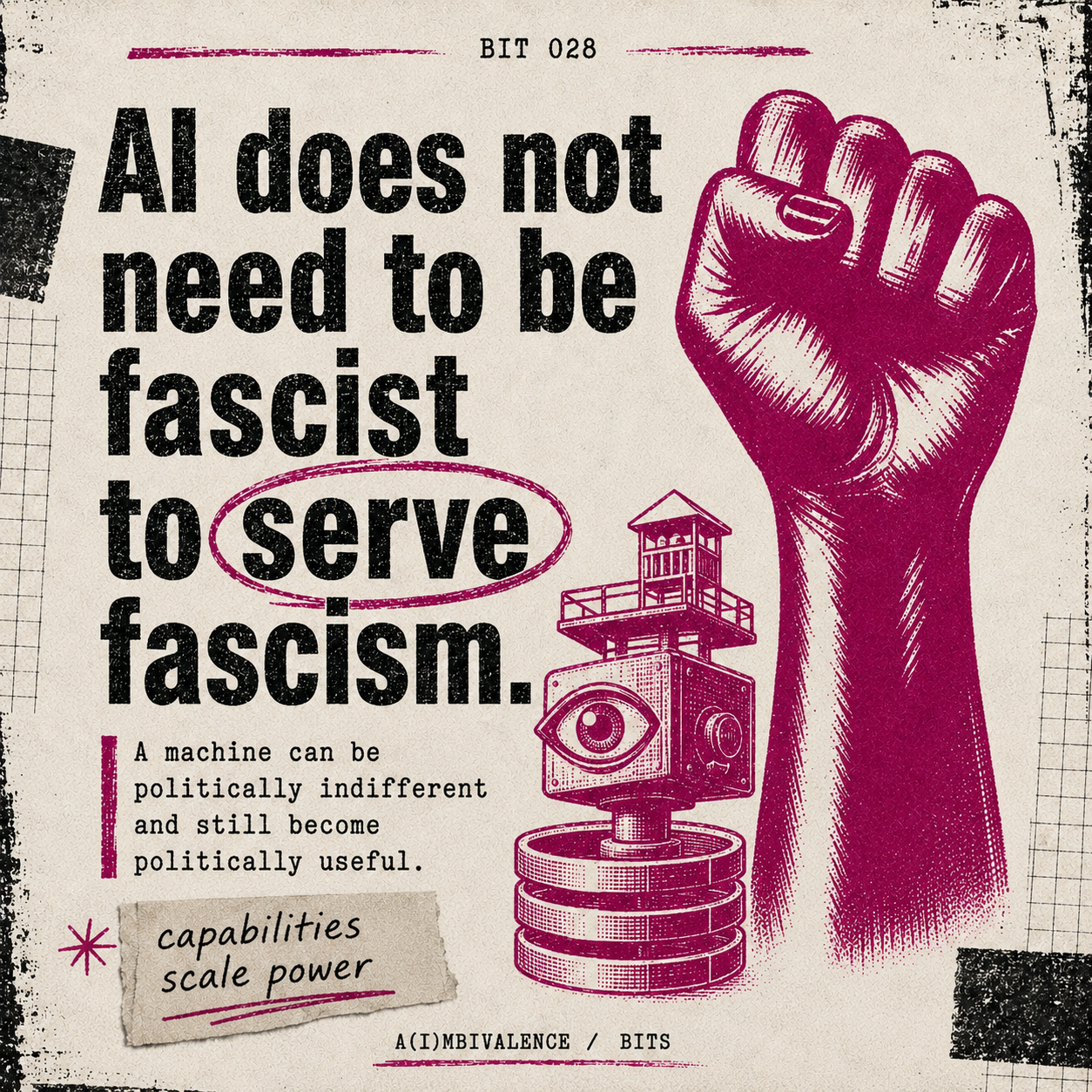
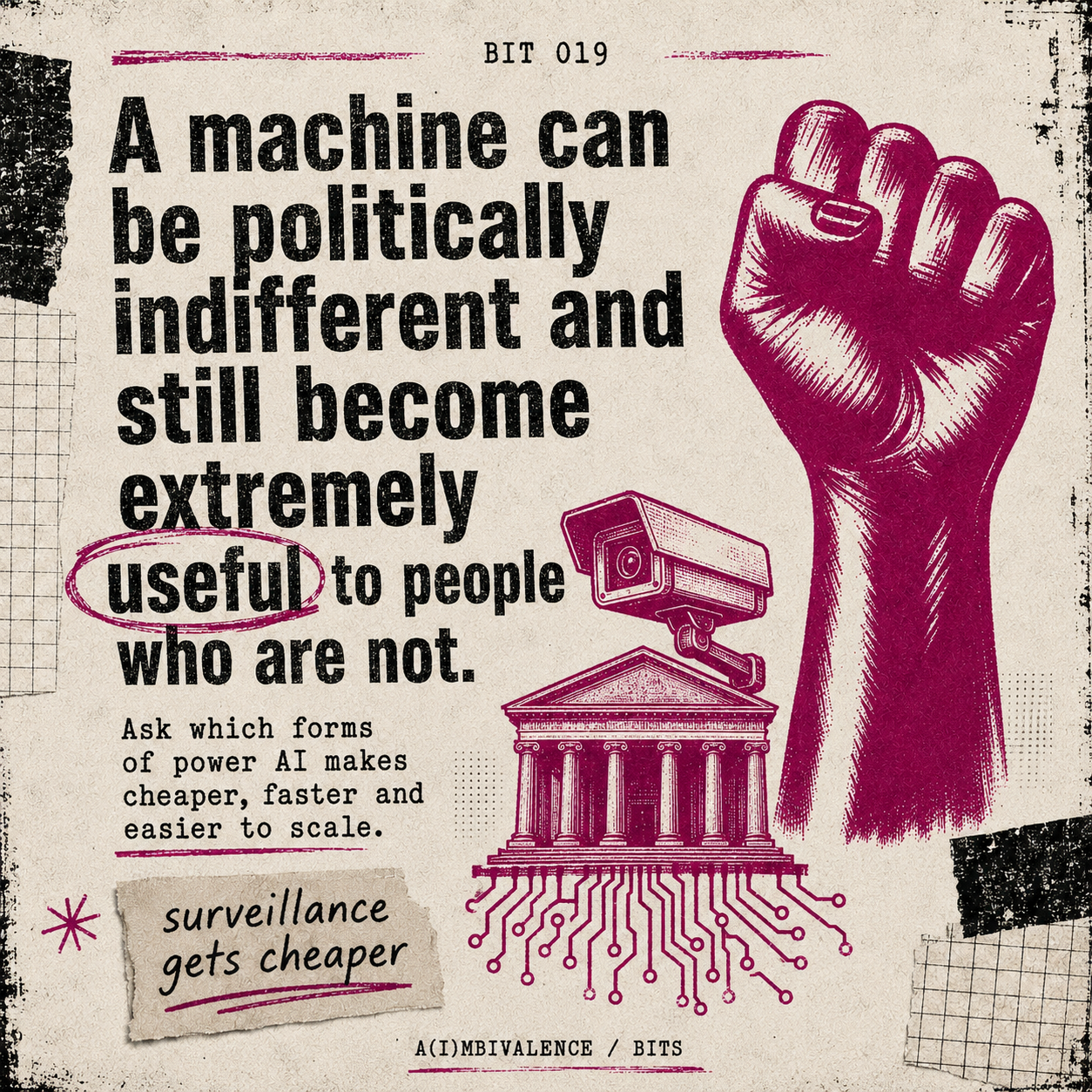
AI Does Not Need to Be Fascist to Serve Fascism
On why asking whether AI itself is fascist is the wrong question, and why we should ask which forms of power it makes cheaper.
Read moreBIT 027
Sep 28, 2026
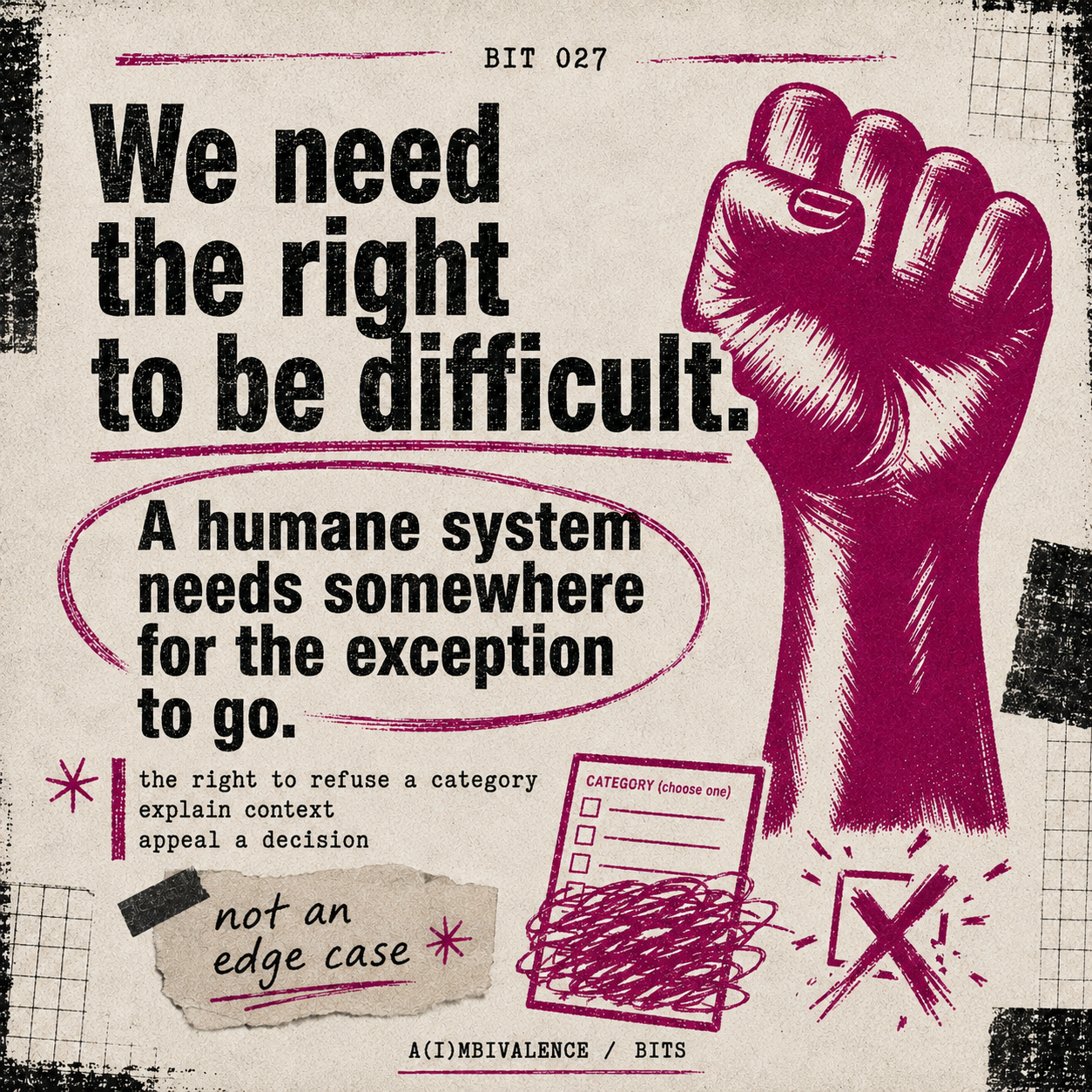
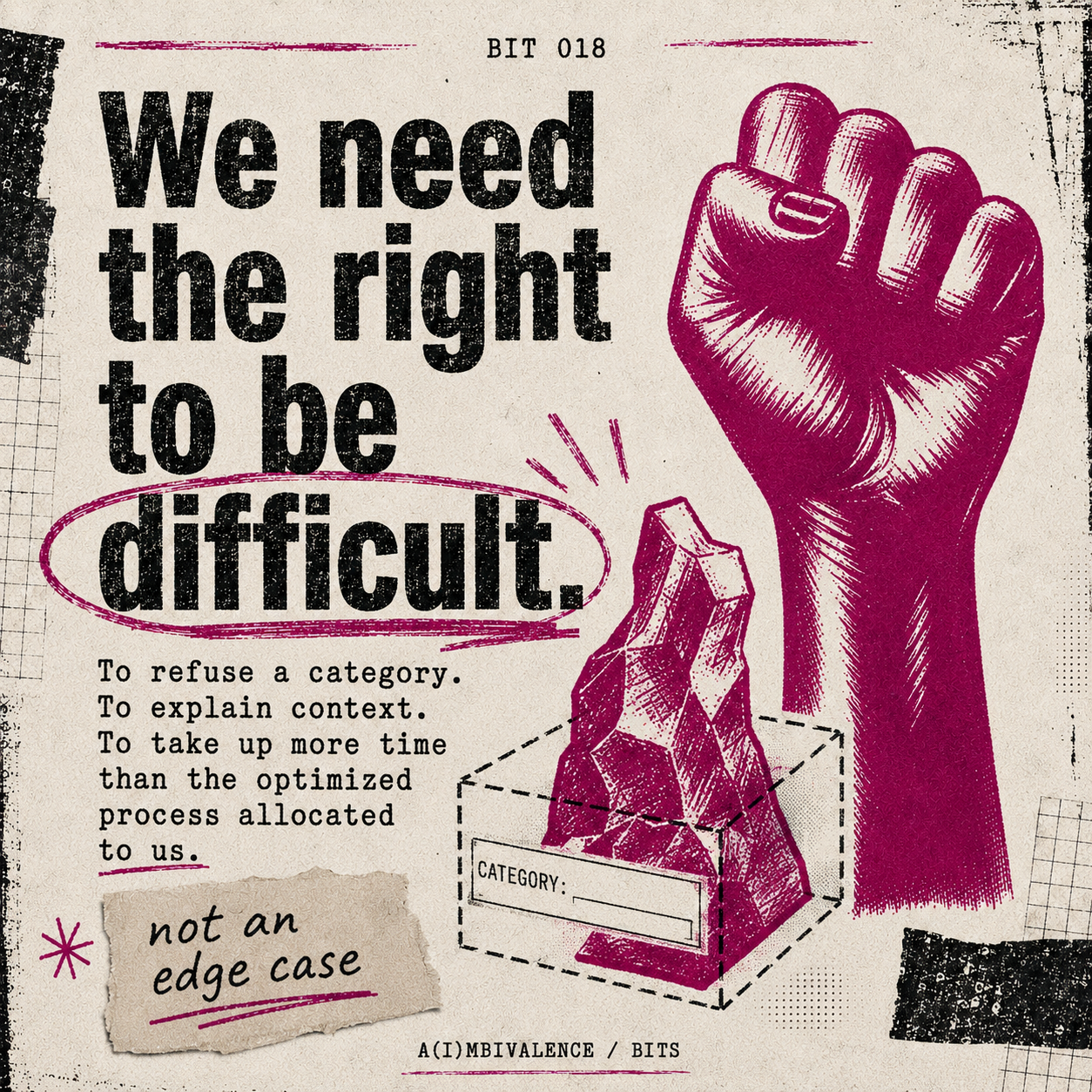
The Right to Be Difficult
On why humane systems need room for the exception, and why the right to contest automated decisions matters.
Read moreBIT 026
Sep 25, 2026
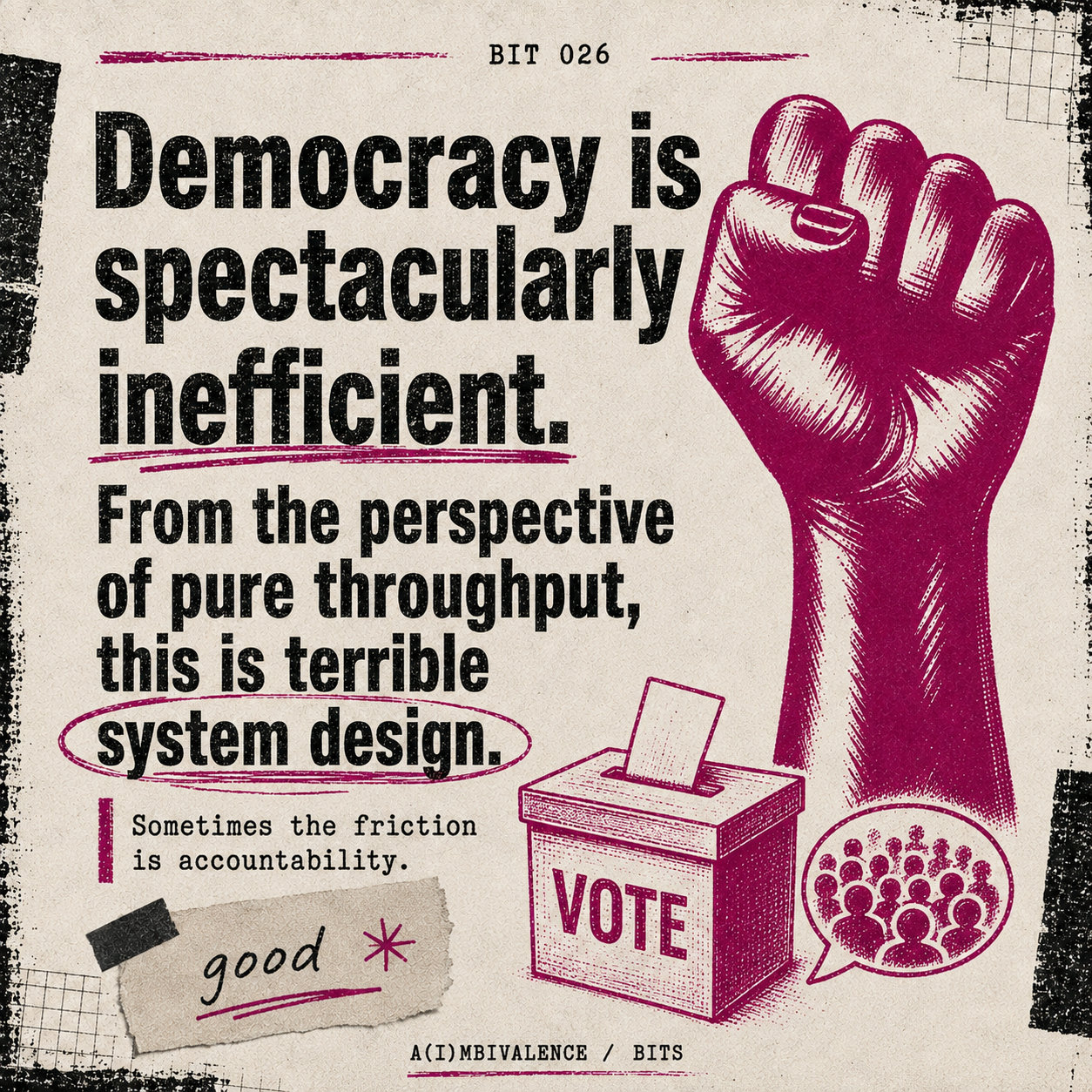
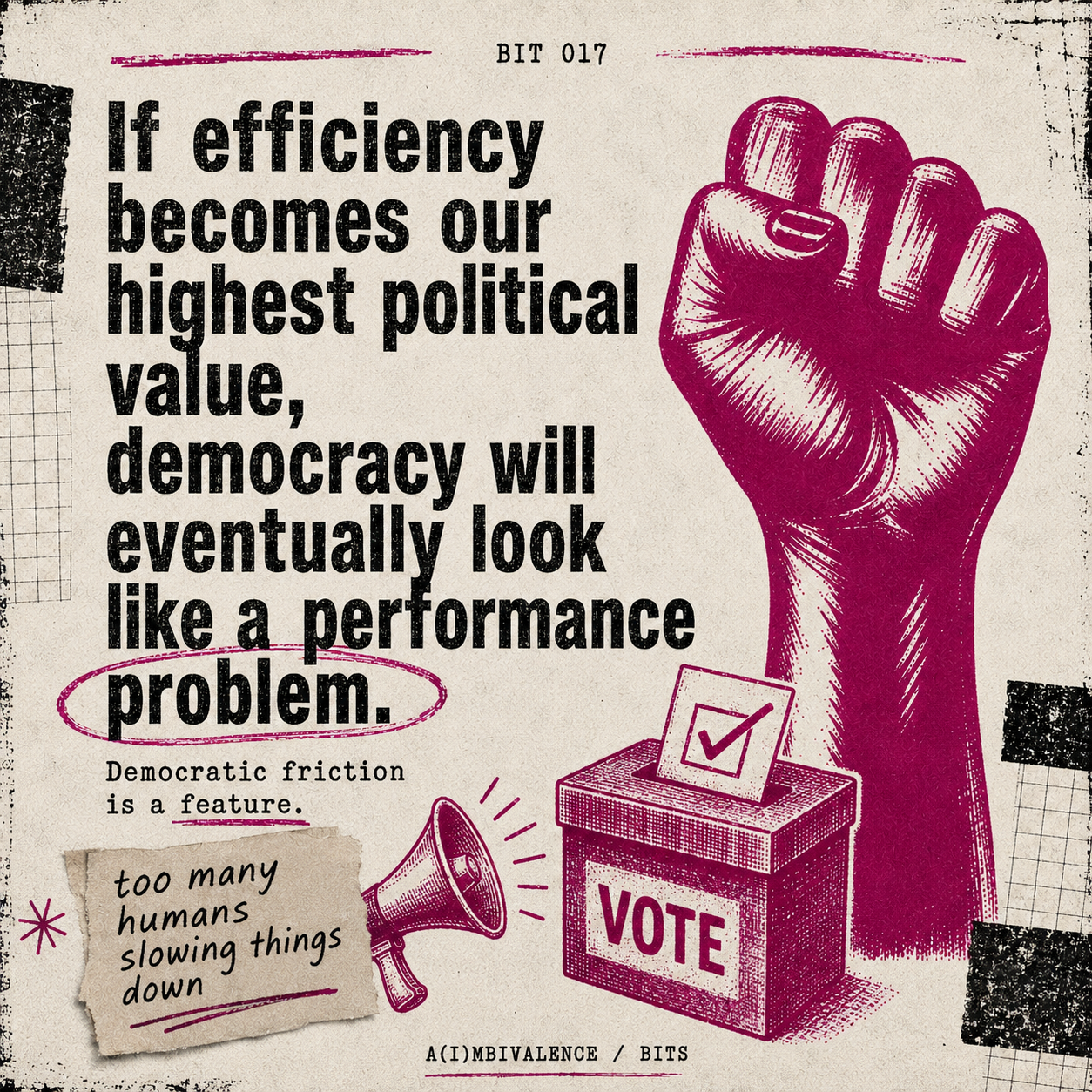
Democracy Is Inefficient
On why democratic friction is not a bug to be optimized away, and what happens when efficiency becomes a political value.
Read moreBIT 025
Sep 24, 2026
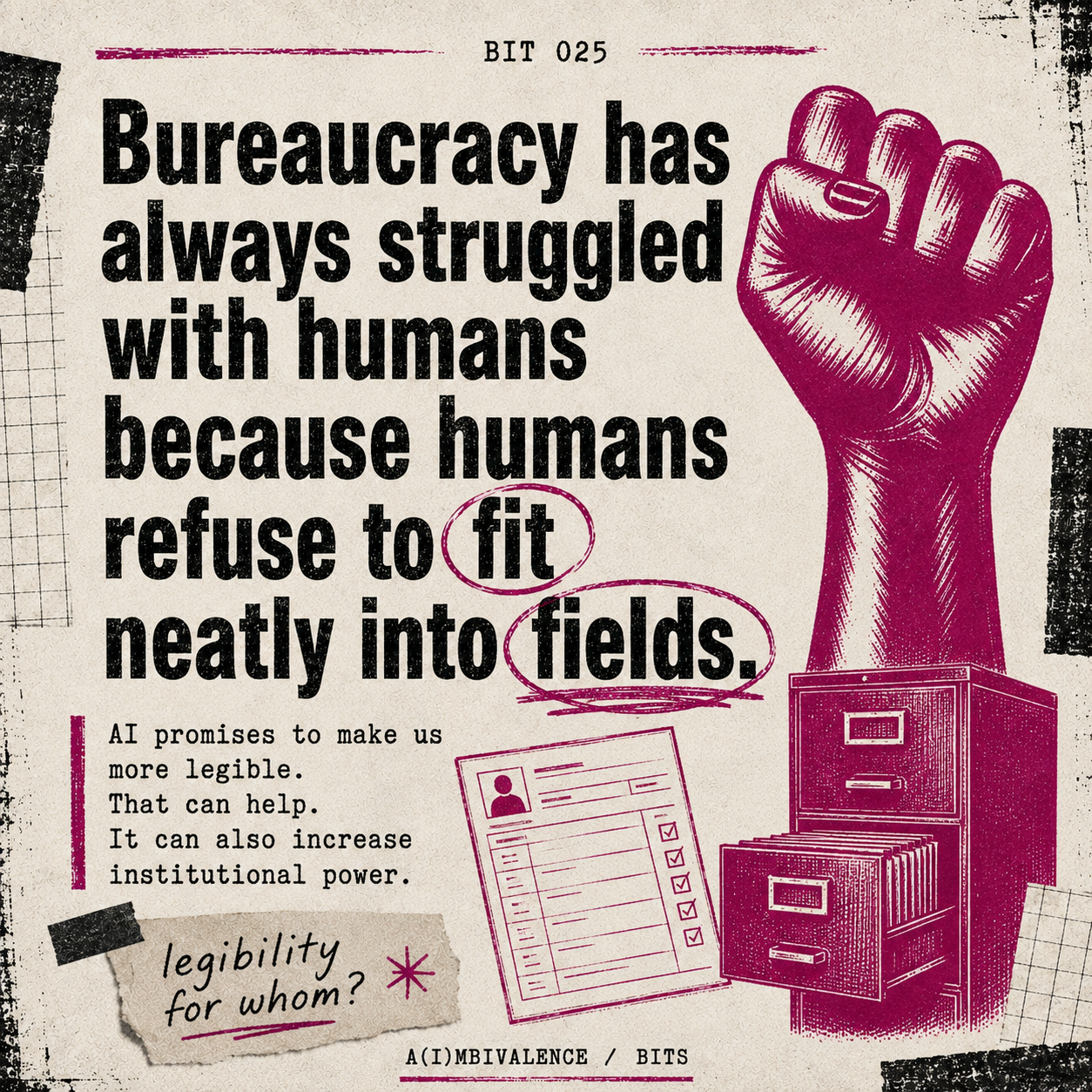
Bureaucracy Loves AI
On AI and bureaucratic legibility, and what happens to the person who does not fit the model.
Read moreBIT 024
Sep 23, 2026
You Don't Need to Ban Thinking
On convenience as a substitute for prohibition, and why a right can become meaningless without being taken away.
Read moreBIT 023
Sep 22, 2026
The Cognitive Landlord
On landlord as metaphor for AI dependency, and why ownership of infrastructure matters more than control of individual thoughts.
Read moreBIT 022
Sep 21, 2026
Thinking as a Service
On renting cognitive capability, and what changes when thinking itself becomes a subscription.
Read moreBIT 021
Sep 18, 2026
Privatizing Intelligence
On privatized access to cognitive infrastructure, and why dependency looks different from ordinary market competition.
Read moreBIT 020
Sep 17, 2026
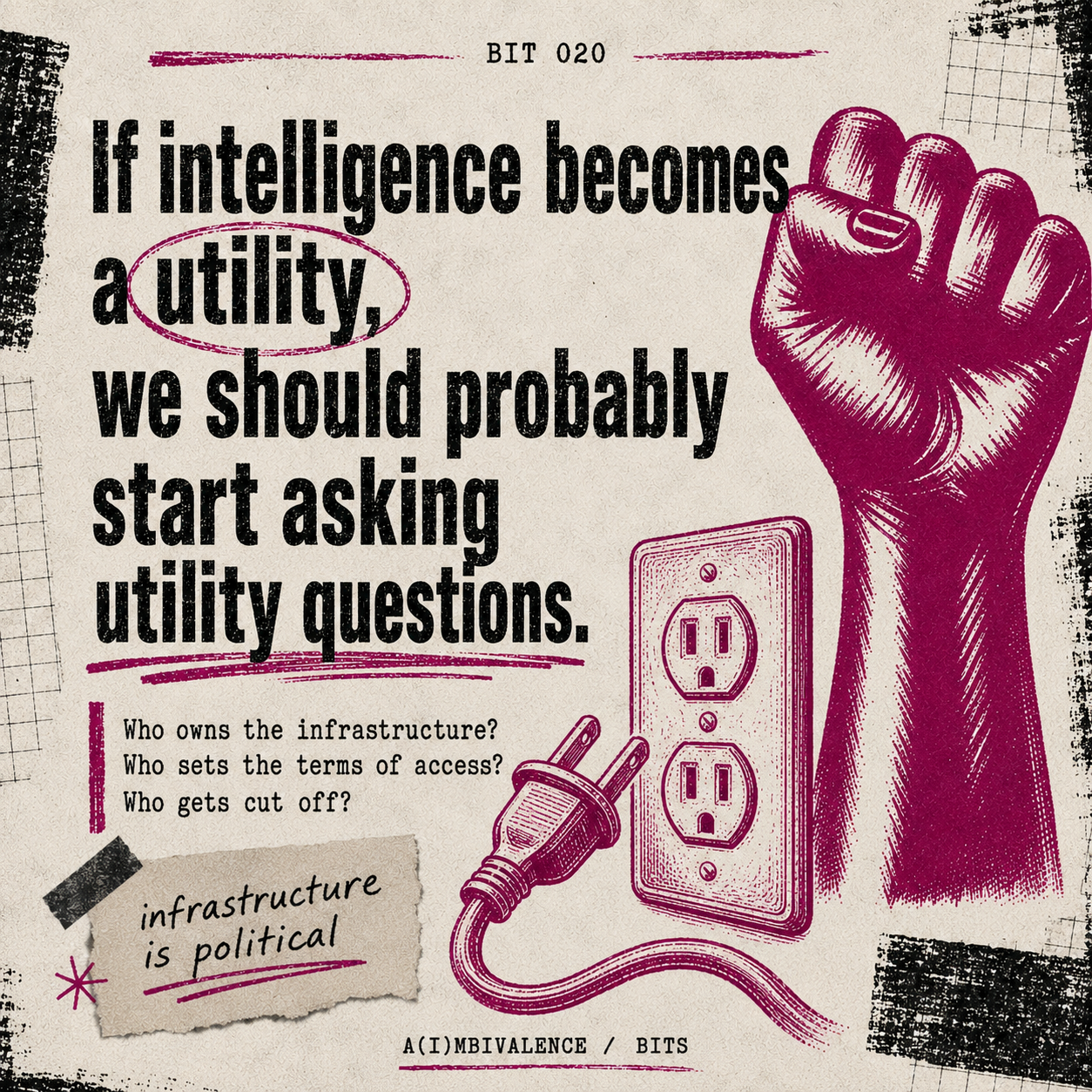
Intelligence as a Utility
On intelligence as infrastructure, and why utility questions become political questions.
Read moreBIT 019
Sep 16, 2026
You cannot organize with people you cannot reach
On AI as an interpretive layer between people, and what that means for collective organizing.
Read moreBIT 018
Sep 15, 2026
The relationship efficiency trap
On efficiency logic applied to relationships, and why some things get worse when we optimize them.
Read moreBIT 017
Sep 14, 2026
Vulnerability is inefficient
On vulnerability as necessary inefficiency, and why perfectly formulated words sometimes reveal less.
Read moreBIT 016
Sep 11, 2026
Who are you when nobody is editing you?
On permanent self-editing with AI, and what remains of a voice that is never allowed to leave the room unfiltered.
Read moreBIT 015
Sep 10, 2026
AI as social shock absorber
On AI as a social shock absorber, and why some discomfort is information, not noise.
Read moreBIT 014
Sep 9, 2026
The proxy self
On AI as a proxy for the self, and what happens when the proxy comes between us and ourselves.
Read moreBIT 013
Sep 8, 2026
Friction is part of the relationship
On friction in human relationships, and why it is sometimes exactly where connection happens.
Read moreBIT 012
Sep 7, 2026
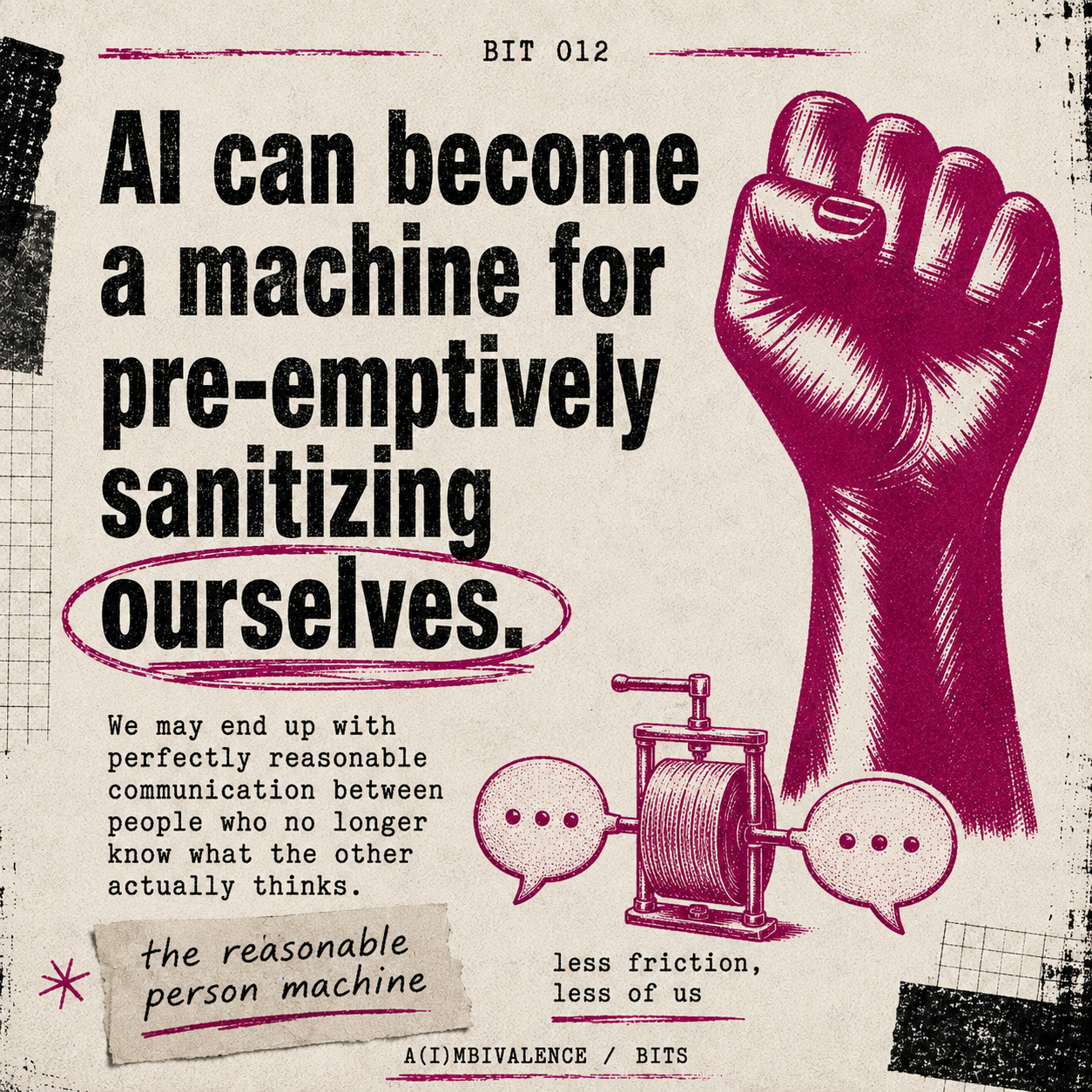
The reasonable person machine
On AI as a tool for self-editing, and why sounding reasonable is not the same as being honest.
Read moreBIT 011
Sep 4, 2026
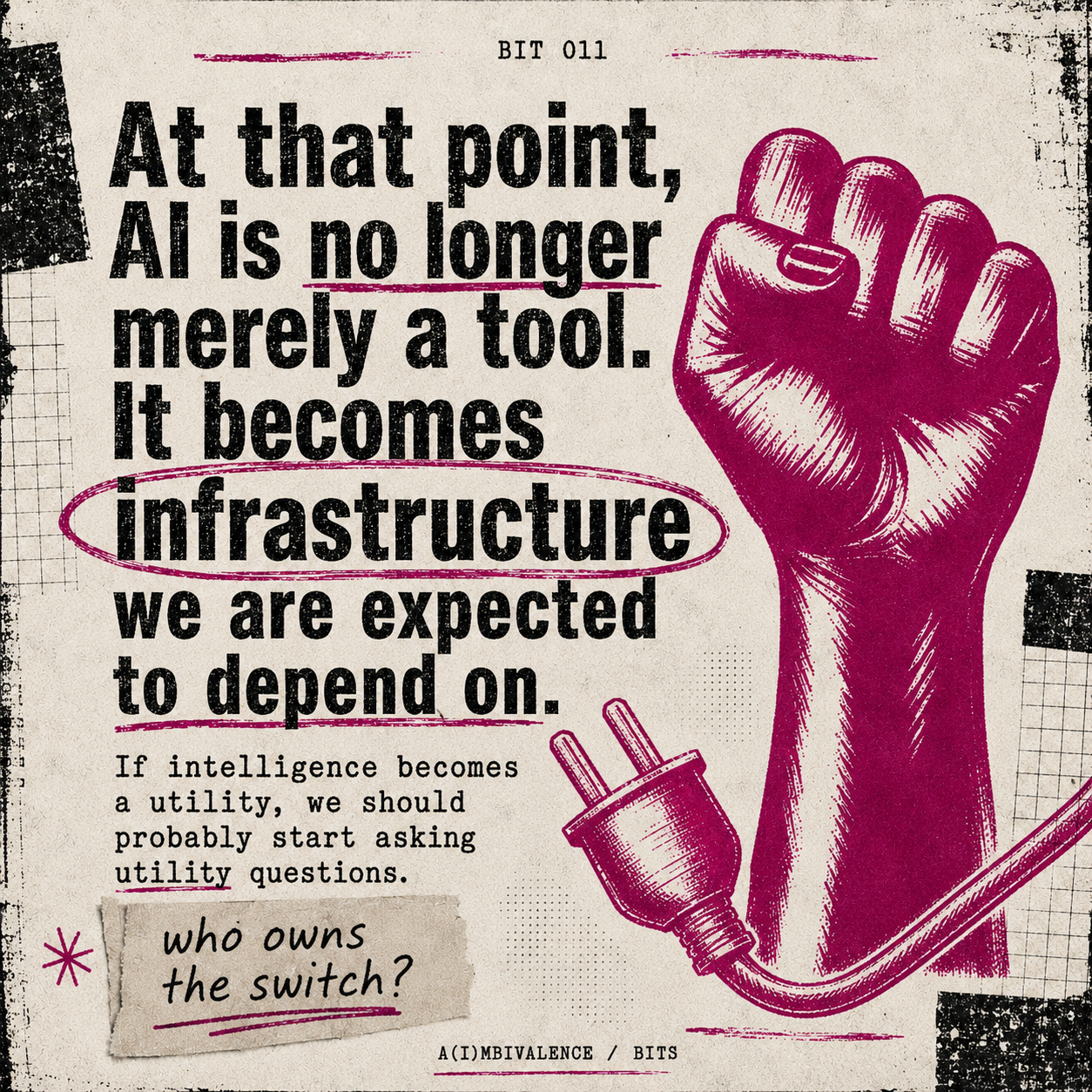
Emotional outsourcing
On outsourcing interpretation to AI, and what gets lost before we even reach our own reaction.
Read moreBIT 010
Sep 3, 2026
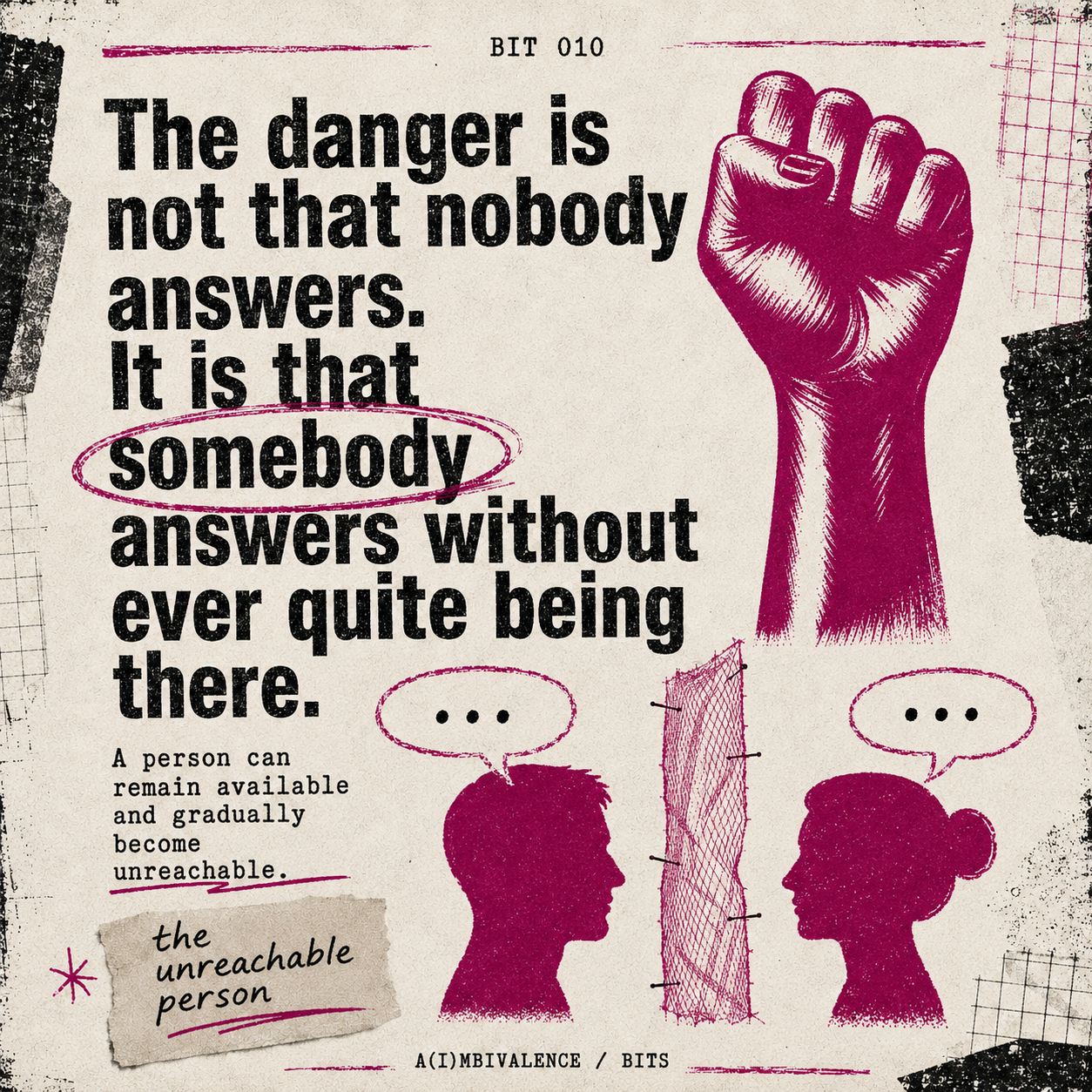
The unreachable person
On AI as a mediating layer between people, and why constant availability is not the same as real contact.
Read moreBIT 009
Sep 1, 2026
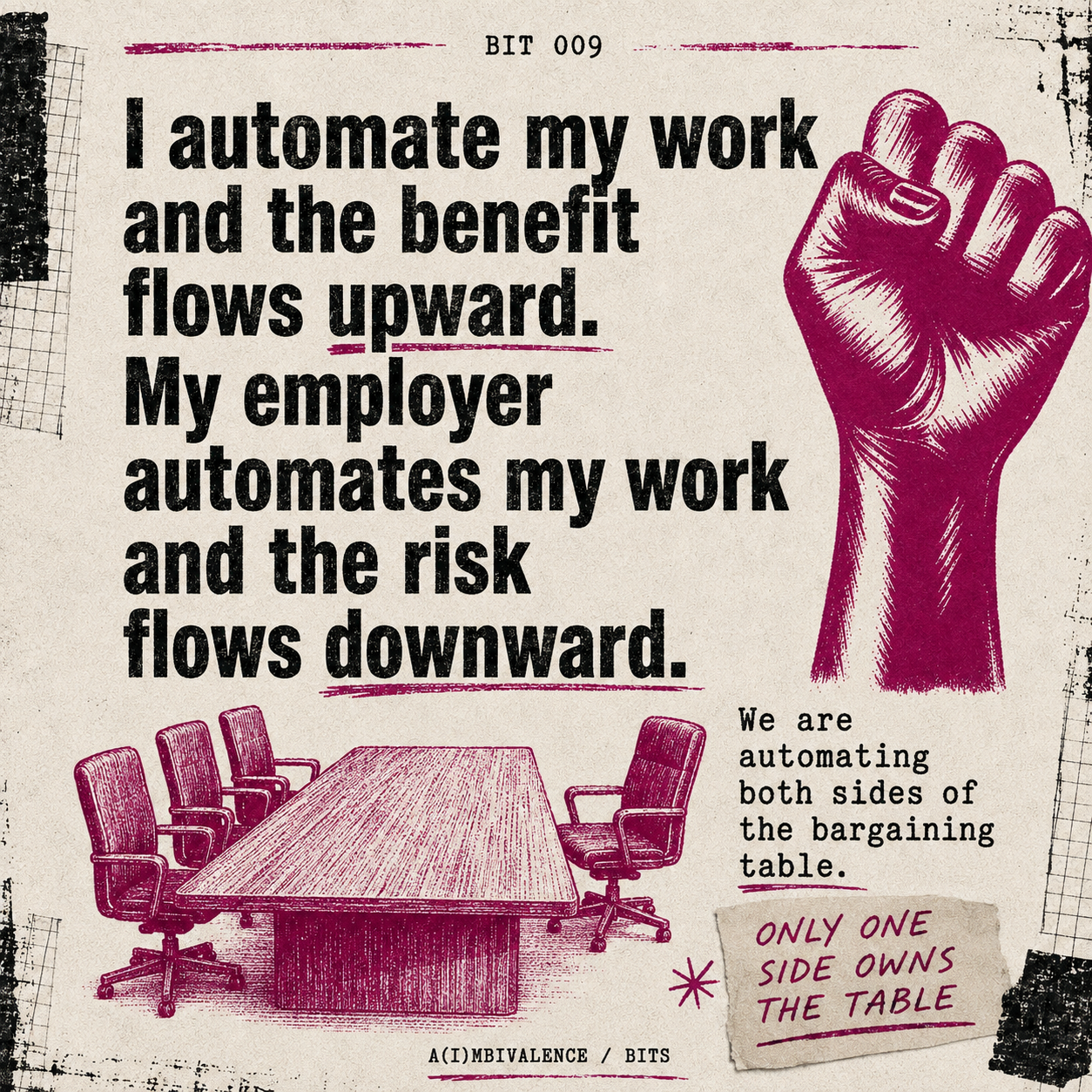
We are automating both sides of the bargaining table
On the asymmetry of automating our own jobs versus automating away someone else's.
Read moreBIT 008
Aug 29, 2026
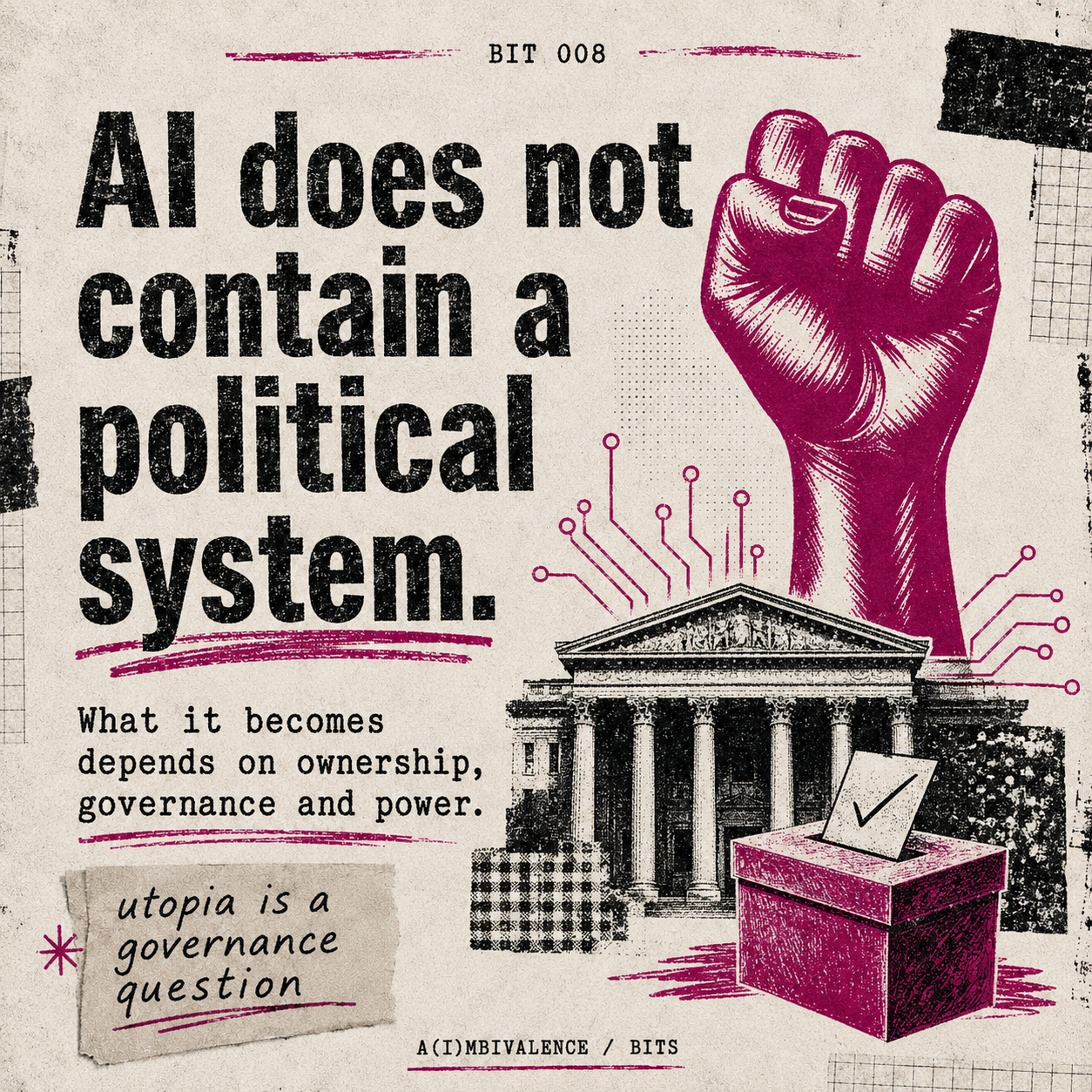
Technology does not contain its politics
On why technology has no built-in politics, only the politics we give it.
Read moreBIT 007
Aug 26, 2026
BIT 006
Aug 23, 2026
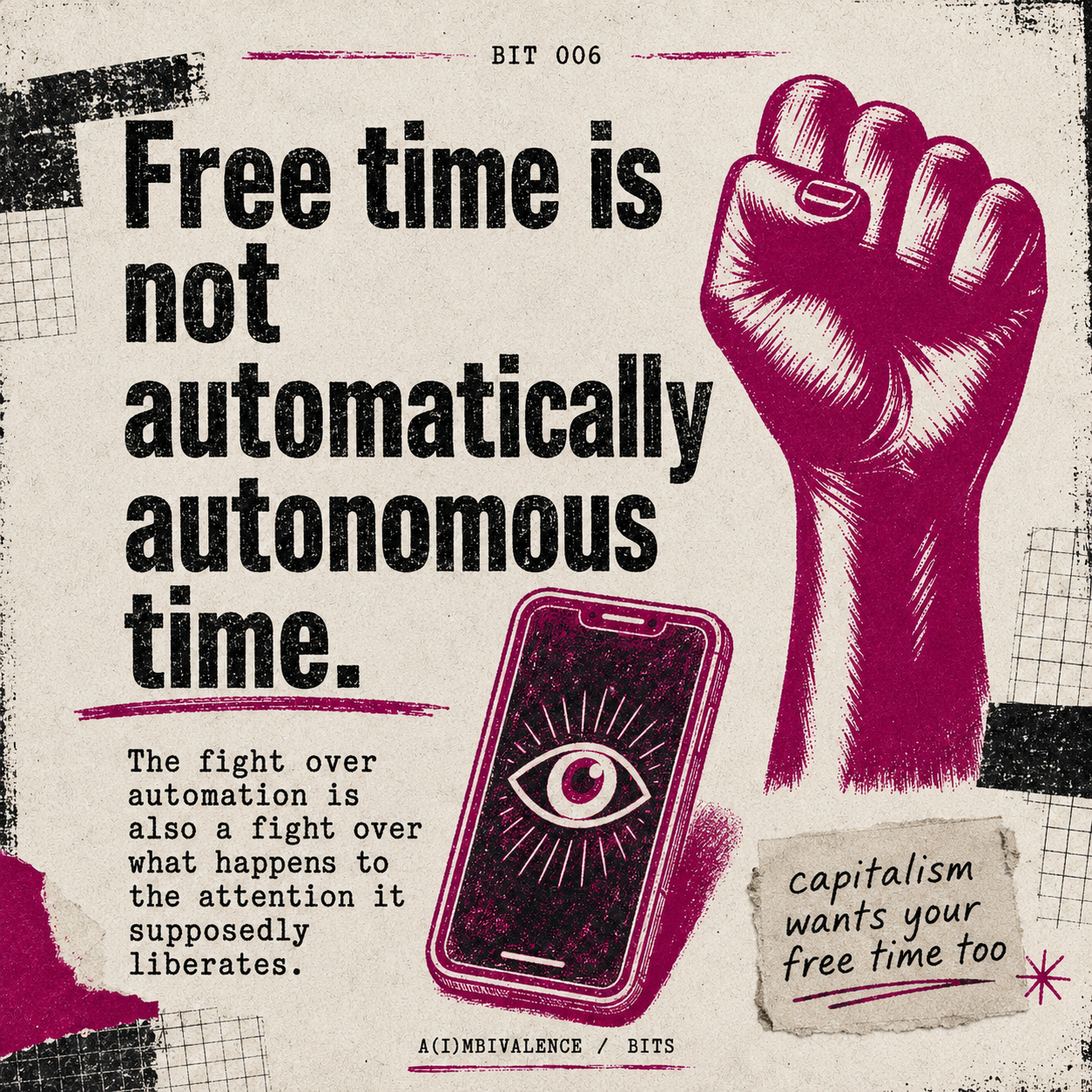
Capitalism wants your free time too
On free time as an economic resource, and why liberation from work is not enough.
Read moreBIT 005
Aug 20, 2026
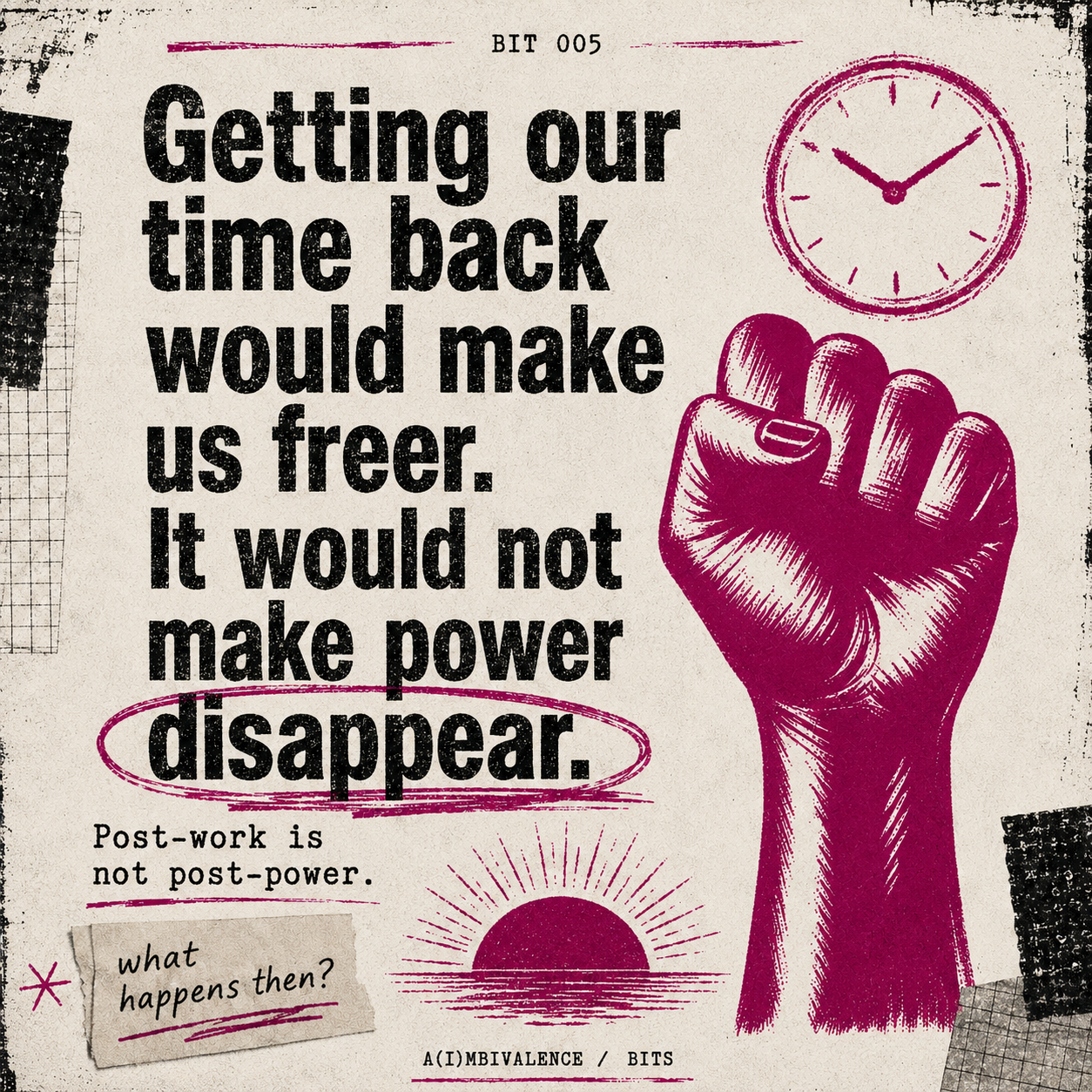
Post-work is not post-power
On automation, free time, and why getting time back is not the same as being free.
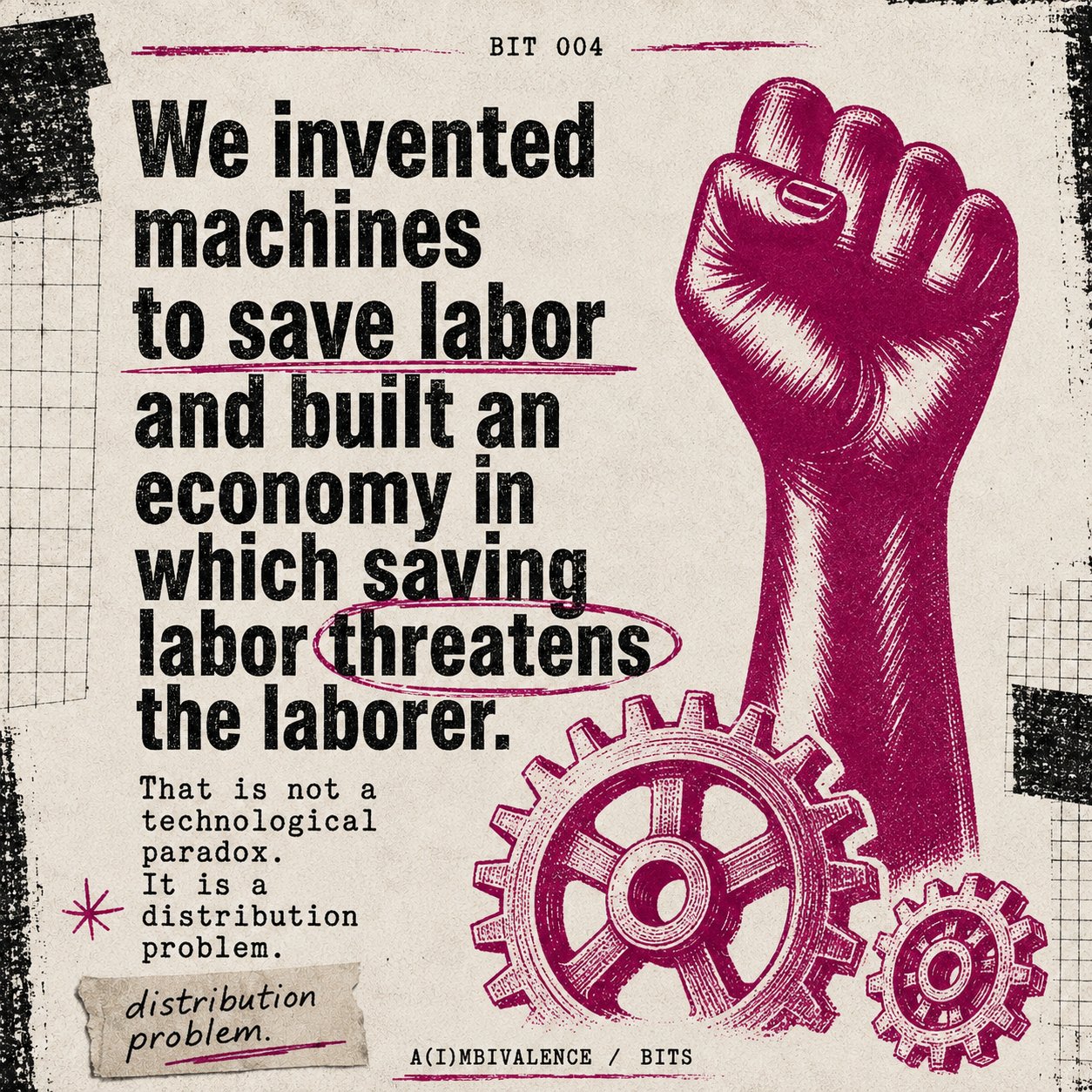
Read moreBIT 004
Aug 16, 2026
We invented machines to save labor
On automation, productivity gains, and the promise we keep losing.
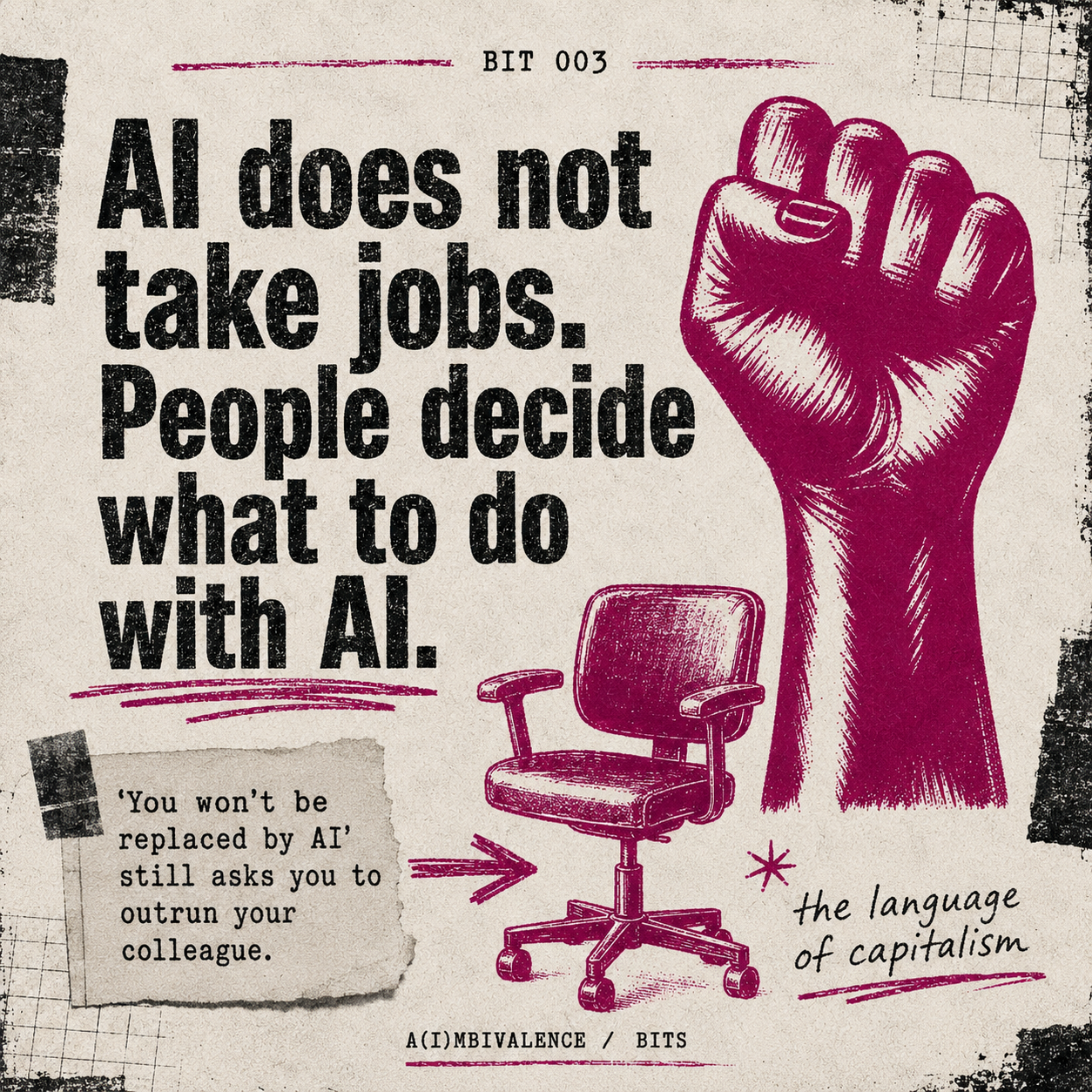
Read moreBIT 003
Aug 12, 2026
AI did not take your job
On the grammar of blame, and who AI's decisions are really made by.
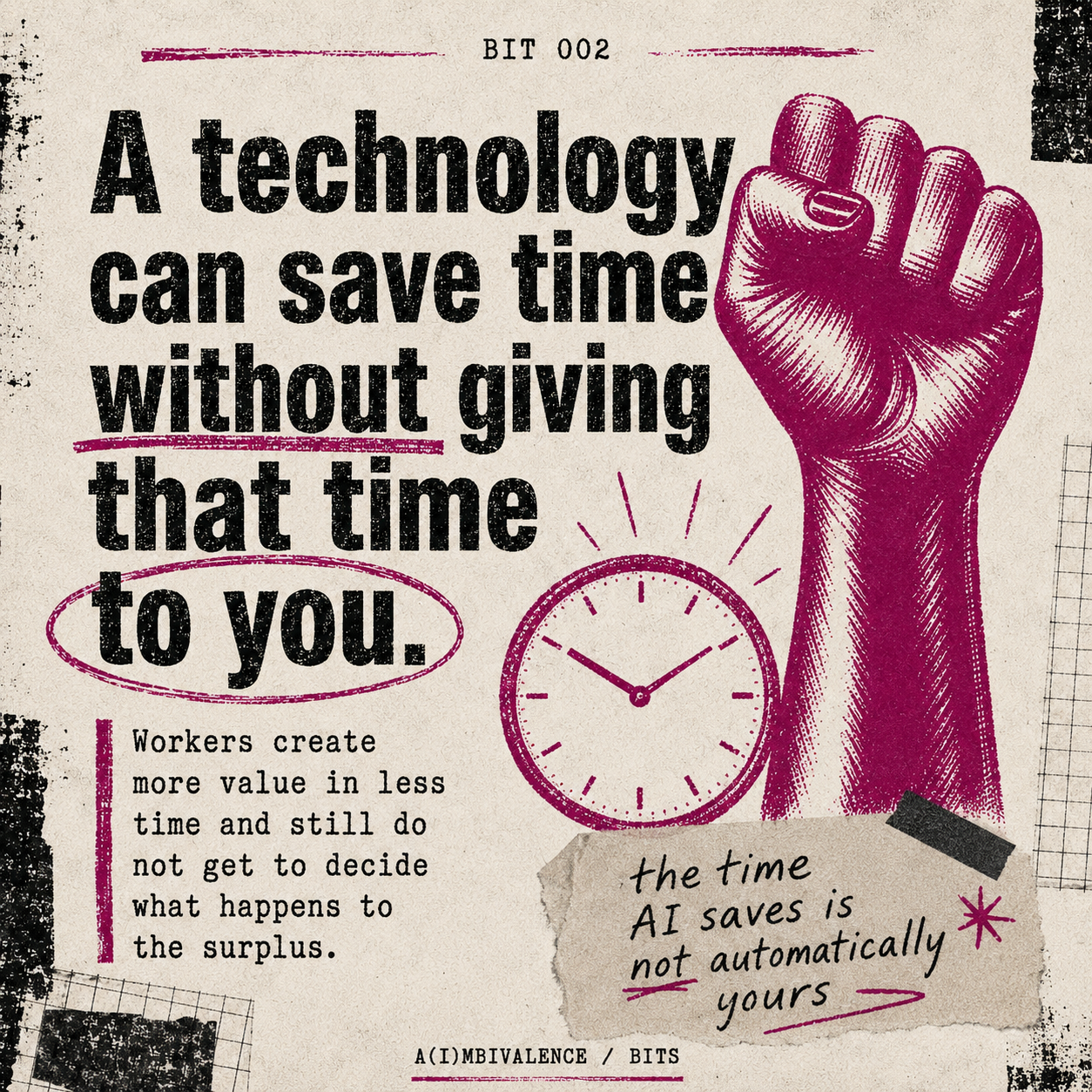
Read moreBIT 002
Aug 8, 2026
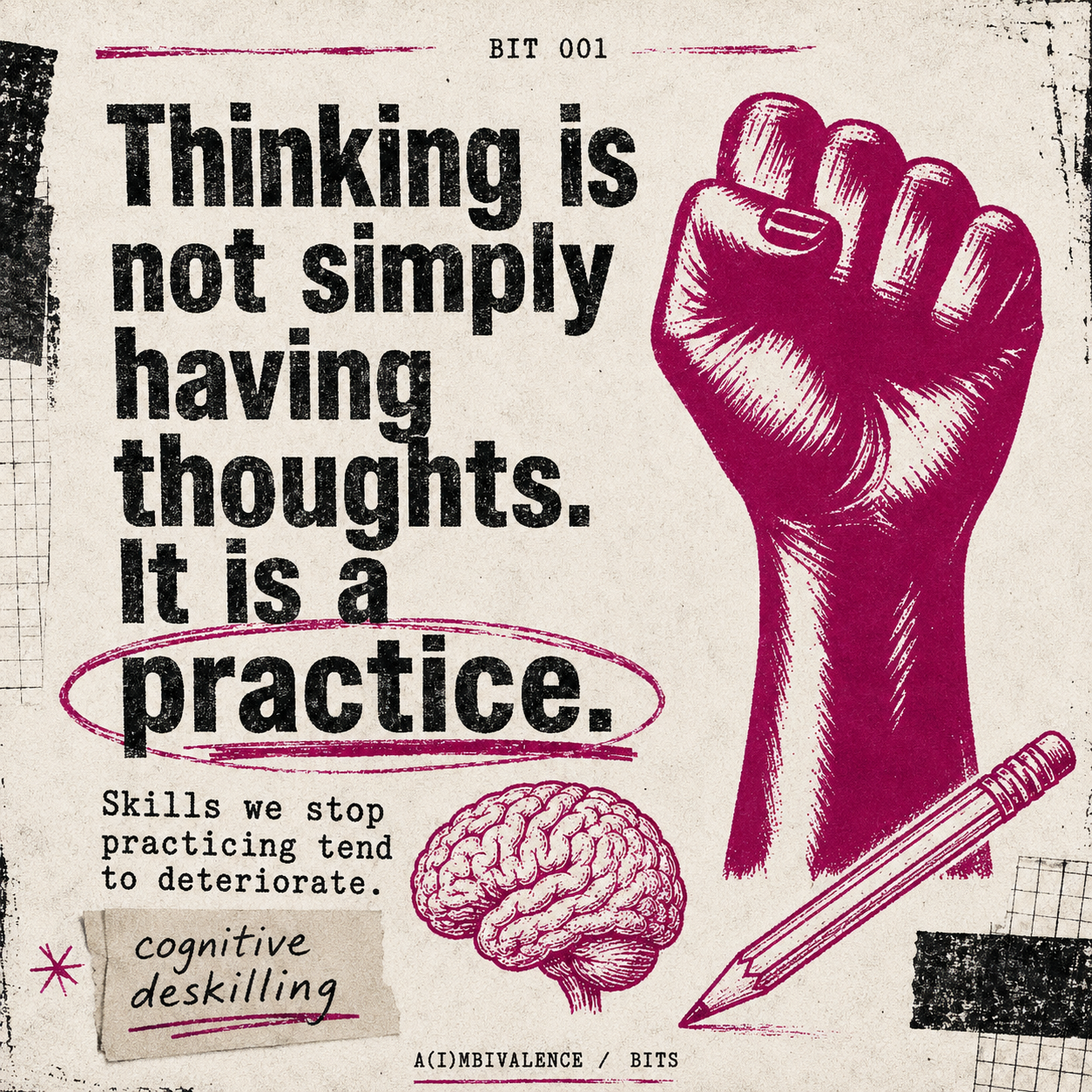
BIT 001
Aug 4, 2026
Uniformity
On AI tools, cognitive deskilling, and why generic output is politically convenient.
Read more